
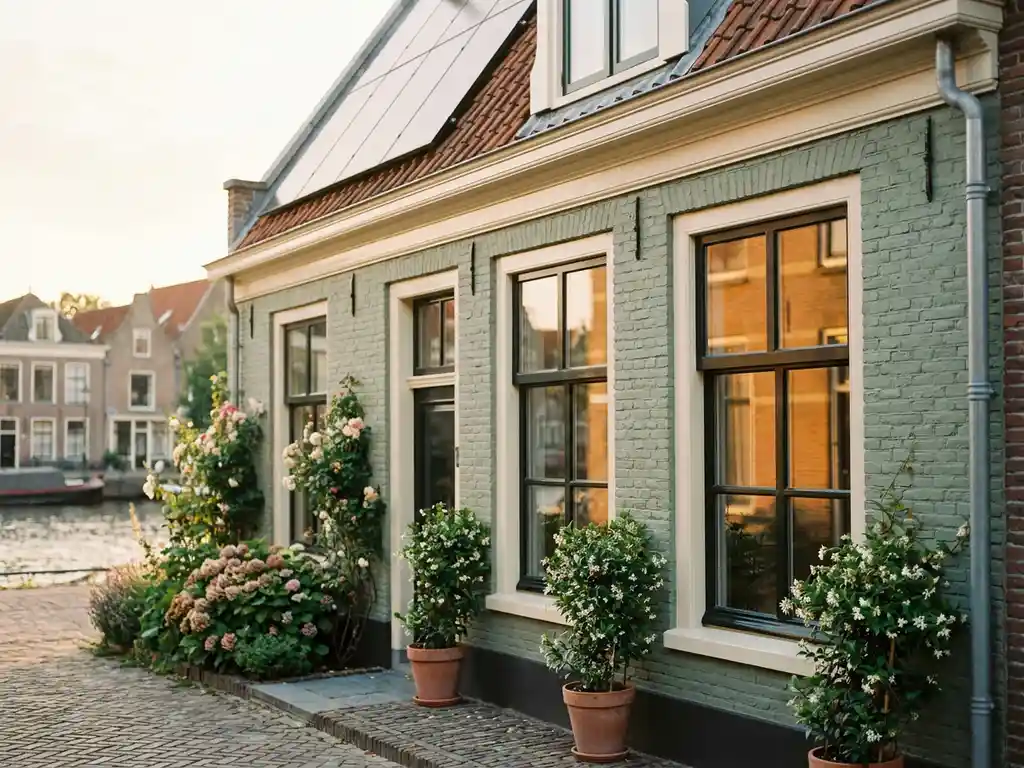
Sustainability improvements have a measurable positive impact on a property’s sale price. Homes with a better energy label sell for more on average than comparable homes with a lower rating — and that gap tends to widen as energy costs rise and buyers make more informed choices. In this article, we answer the most frequently asked questions about sustainability and sale price, so you as a seller know what to look out for.
How much more is an energy-efficient home worth?
In the Dutch market, an energy-efficient home is demonstrably worth more than a comparable home with a lower energy label. The exact difference depends on location, property type, and current energy prices, but the gap between an A label and a D label or lower can run into tens of thousands of euros in favor of the energy-efficient home.
Buyers today actively factor in what a home will cost them each month. A home with solar panels, good insulation, and a heat pump has lower energy bills, and that translates directly into what someone is willing to pay. The greater the difference in energy performance, the greater the value advantage.
Mortgage lenders are also responding to this gap. In many cases, buyers of energy-efficient homes can borrow a higher amount, which increases their willingness to pay. This effect further strengthens the market value of homes with a good energy label.
Which sustainability measures have the greatest impact on sale price?
Not every sustainability measure has the same effect on sale price. Measures that improve the energy label the most and are immediately visible to buyers generally have the greatest influence on what a home fetches at sale.
The measures with the most impact are:
- Roof insulation: one of the cheapest and most effective measures, with a direct improvement to the energy label
- Cavity wall and floor insulation: significantly reduces heat loss and is easy for buyers to verify
- Double or triple glazing (HR++): visibly present and immediately noticeable in terms of comfort and heating costs
- Solar panels: popular with buyers, deliver a demonstrable saving, and are easy to communicate during the sale
- A high-efficiency boiler or heat pump: replacing an old boiler raises the label and gives buyers confidence in the technical condition of the property
Measures that only improve comfort without affecting the energy label — such as underfloor heating without accompanying insulation — have a less direct effect on the appraised value.
Do sustainability upgrades pay for themselves before selling?
Whether an investment in sustainability pays for itself before a sale depends on the scale of the work and the expected added value. Smaller measures such as roof insulation or replacing glazing often pay for themselves. Larger projects, such as a full heat pump installation, are less certain to do so.
A practical way to assess this is a simple comparison:
- What does the measure cost net (after any subsidies)?
- What label improvement can you expect?
- What is the expected added value for that label improvement in your region and property type?
In areas with high competition in the housing market, such as Amsterdam or Amstelveen, the added value of a better energy label is often greater than in regions with less pressure. When selling, prioritize measures that improve the label while also enhancing the presentation of the home, such as new windows or a well-maintained boiler installation.
Also take into account available subsidies through the Warmtefonds or local government schemes. These reduce the net investment and significantly improve the payback period.
What does an appraiser look at when assessing sustainability?
An appraiser assesses sustainability primarily through the energy label and the underlying measures recorded within it. They also look at the technical condition of the installations, the presence of insulation materials, and the structural quality of the building envelope.
Specifically, an appraiser looks at:
- The valid energy label (based on a certified energy assessment)
- The presence and condition of insulation in the roof, floor, and walls
- The type of glazing and window frames
- The heating and hot water systems
- Any solar panels and their output
An appraiser also compares the property with recently sold comparable homes in the area. If homes with an A label on your street consistently achieve higher sale prices than homes with a C label, that is factored into the valuation. A valid and up-to-date energy label is important in this regard: an expired or missing label can limit the appraiser’s ability to assign that added value.
Does a poor energy label affect a home’s saleability?
Yes, a poor energy label affects a home’s saleability. In 2026, buyers are increasingly aware of energy costs and future sustainability requirements. A home with an E, F, or G label raises questions about what the buyer will still need to invest after purchase, and that dampens their willingness to pay the asking price.
That doesn’t mean a home with a poor label is unsellable. However, as a seller you should expect:
- A longer time on the market: buyers hesitate more often or request more time to consider
- Greater negotiating room demanded by buyers: they factor the expected sustainability costs into their offer
- Restrictions on mortgage lending: buyers may be able to borrow less for homes with a low energy label, which narrows the pool of potential buyers
In competitive markets like Amsterdam, a home with a low energy label is more likely to be overlooked compared to similar homes that have already been upgraded. Transparency about the condition of the property and a realistic asking price are all the more important in such cases.
When does it make sense to make sustainability upgrades before selling?
It makes sense to invest in sustainability before selling when the investment leads to a label improvement that increases the added value and shortens the time on the market. This is the case if your home currently has a C label or lower and can reach a B or A label with relatively limited work.
Making sustainability upgrades before selling is particularly worthwhile when:
- The home has been on the market for a long time without receiving an offer
- Buyers in your segment are actively filtering by energy label
- Simple measures are available with a significant label impact, such as roof or glazing insulation
- Subsidies are available to reduce the investment
It is less advisable to carry out major works just before selling — such as a full heat pump installation — if the expected added value does not cover the costs. In that case, it is better to list the home transparently with an energy assessment report, so buyers can make a well-informed decision themselves.
Timing also matters practically: sustainability measures take time to plan and carry out. Allow at least several weeks to several months for a new energy label application after the work is completed. Plan this well in advance of your intended sale date.
How we help you sell your home
At Urban Homies, we guide you from start to finish through the process of selling your home. We begin with a thorough valuation that also takes into account the impact of the energy label on your home’s market position. Based on that, we give you concrete advice on what a potential sustainability investment would yield, so you can make a well-informed decision before going to market.
What we do for you:
- Valuation with attention to energy performance and market conditions
- A tailored marketing strategy and professional presentation
- Guidance from the initial strategy meeting through to signing at the notary
- Aftercare following the transfer
Want to know what your home is worth and how sustainability improvements affect the sale price? Take a look at our sales guidance service or get in touch directly for a no-obligation conversation.