
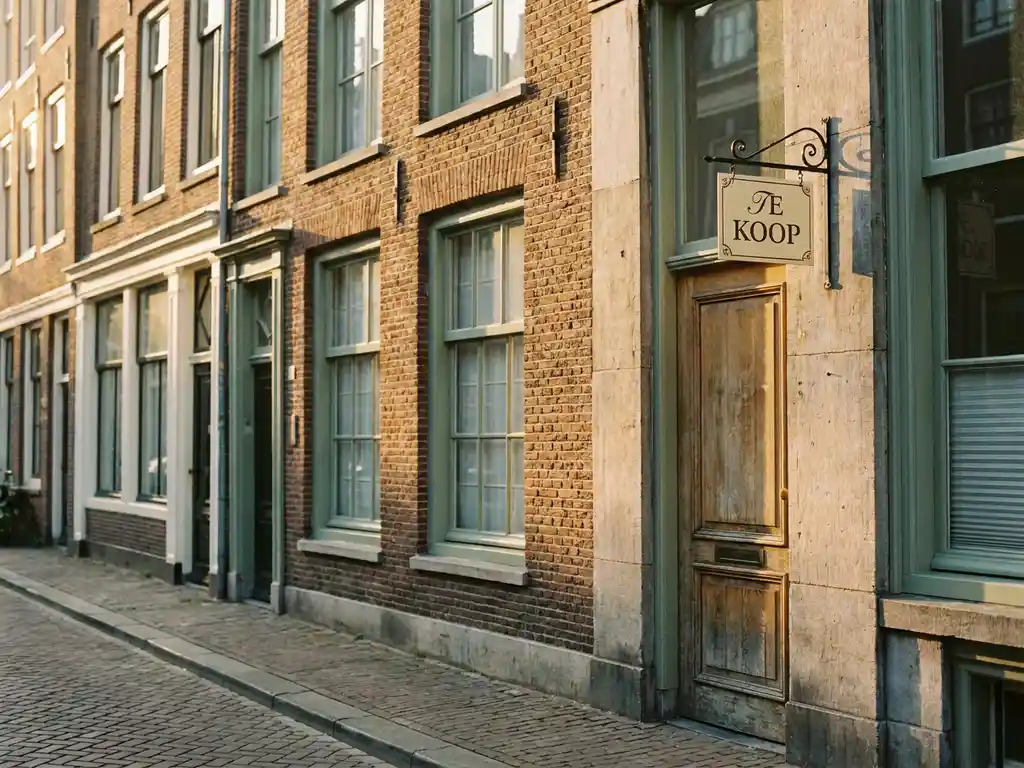
Selling a listed building comes with additional rules that don’t apply to ordinary homes. Listed status protects the historical and architectural character of a property, meaning both seller and buyer face specific obligations regarding maintenance, renovations, and use. In this article, we answer the most frequently asked questions about selling and buying a listed building in the Netherlands.
What restrictions apply when selling a listed building?
From a legal standpoint, selling a listed building follows largely the same process as selling an ordinary home. You don’t need a special permit to sell a listed property, and the transfer of ownership at the notary proceeds in the usual way. What does differ are the obligations that automatically come with the property and that the new owner takes on.
Listed status is tied to the property, not the owner. This means that upon purchase, the buyer automatically assumes all associated obligations. These include the duty to maintain the property, the restriction on making alterations without a permit, and the obligation to keep the listed building in good condition. As a seller, you are legally required to fully inform the buyer of this status and its implications. Failing to do so can allow the buyer to contest the sale after the fact on grounds of misrepresentation.
In practical terms, this means the following for the sale:
- The listed status must be explicitly stated in the deed of sale
- The buyer must be informed of any ongoing permit procedures or enforcement cases
- Unauthorized renovations can complicate the sale or push down the price
What does the buyer need to know about the maintenance obligations of a listed building?
As the buyer of a listed building, you are legally required to keep the property in good condition and to prevent it from falling into disrepair. This maintenance obligation applies to national listed buildings under the Heritage Act, and to municipal listed buildings under local bylaws. You may not neglect the property, even if you are not living in it temporarily.
In practice, this means that as the owner you are responsible for routine maintenance, such as preserving the facade, roof, window frames, and other listed elements. If you want to carry out work that goes beyond ordinary maintenance, you will in most cases need an environmental permit. The distinction between maintenance and renovation is not always clear-cut, so when in doubt it is advisable to contact your local municipality or the Cultural Heritage Agency of the Netherlands (RCE) in advance.
Another important consideration is that as a buyer you should thoroughly investigate, before purchasing, which maintenance work has already been carried out and what still needs to be done. A structural survey by a specialist with expertise in listed buildings is strongly recommended.
Do you need permission to renovate a listed building before selling it?
Yes, almost any alteration to a listed building requires an environmental permit in advance. This also applies if you want to renovate or modernize the property with a view to selling it. Work carried out without a permit is illegal and can result in enforcement action, fines, or an obligation to undo the changes.
The permit requirement applies to interventions that affect the appearance or structure of the listed building. Examples include replacing window frames, altering the facade layout, removing historic details, or adding dormer windows. Some minor maintenance work, such as painting in the original color, is exempt — but this too varies by municipality.
As a seller, it is important to verify whether:
- All previously carried out renovations have the required permits
- There are no outstanding enforcement cases
- Any planned work before the sale is permitted in good time
You are not necessarily required to rectify unauthorized alterations before selling, but you are obligated to inform the buyer about them. A buyer can factor this information into their offer or request additional guarantees.
What is the difference between a national listed building and a municipal listed building when selling?
The key difference lies in the level of protection and the authority responsible for oversight. A national listed building is registered in the National Listed Buildings Register and falls under the Heritage Act. A municipal listed building is designated by the local authority and falls under local heritage bylaws. Similar disclosure obligations apply to the sale of both types, but the rules regarding permits and subsidies can differ significantly.
Below is an overview of the main differences:
- National listed building: Protected at the national level under the Heritage Act. Permit applications are handled by the municipality, but the RCE provides advisory input. Owners are eligible for the Monument Preservation Subsidy (SIM). Tax deduction options have been limited since the abolition of the listed building tax deduction in 2019.
- Municipal listed building: Protected at the local level. The municipality sets its own rules and oversees enforcement. Subsidies depend on local policy and vary considerably between municipalities. Protection is generally less strict than for national listed buildings.
For buyers, it is important to establish exactly which type of listed building is involved before purchasing. This determines which subsidies are available, how stringent the permit requirements are, and which authority to contact with questions.
Are there subsidies or tax benefits available for buyers of a listed building?
Yes, subsidies are available for owners of listed buildings, but the tax benefits have become more limited in recent years. The main scheme for national listed buildings is the Monument Preservation Subsidy (SIM), which supports owners with the costs of routine maintenance. For municipal listed buildings, some municipalities offer their own subsidy schemes.
The SIM subsidy is intended for maintenance work required to preserve the listed building. This includes work such as roof maintenance, facade repairs, and the restoration of historic details. The subsidy typically covers a percentage of eligible costs. Applications are submitted to the RCE and are subject to fixed submission periods.
Regarding tax benefits:
- The listed building deduction in income tax was abolished in 2019
- Maintenance costs are deductible in certain cases under the owner-occupied home scheme, but this applies only to specific situations
- VAT benefits may apply for restoration work carried out by certified contractors
It is advisable to speak with a tax advisor familiar with listed buildings before purchasing, so that you have a realistic picture of the financial implications.
How does listed status affect the sale price of a property?
Listed status has a variable effect on the sale price. In many cases it increases the value of a property, as listed buildings have unique architectural features that are difficult to replicate. At the same time, the associated obligations and restrictions can push the price down, particularly when there is a backlog of maintenance or unauthorized renovations.
Location plays a major role. A nationally listed building in a sought-after Amsterdam canal district typically commands a higher market value than a comparable non-listed property, owing to scarcity and prestige. In less in-demand areas, listed status can actually be a barrier for buyers who are deterred by the maintenance obligations and limited freedom to renovate.
Factors that positively influence the price:
- Unique historical features and authentic period details
- Well-maintained condition and permitted renovations
- A protected townscape or village setting as context
Factors that can negatively influence the price:
- Deferred maintenance that the buyer will need to address
- Unauthorized alterations that carry risks
- Limited scope for extensions or modernization
Accurately valuing a listed building requires specialist market knowledge. Standard comparison models are less effective, as every listed building is unique and the market for listed properties is narrower than the general housing market.
How we help with the sale of a listed building
Selling a listed building requires a different approach than selling an ordinary home. The right positioning, an accurate valuation, and a thorough understanding of the property’s unique characteristics make the difference between a smooth sale and a lengthy process.
At Urban Homies, we guide you through the entire sales process, from the initial strategy consultation to the transfer at the notary. Here is what we do for you:
- Valuation based on the specific characteristics of the listed building and current market conditions
- Professional presentation with photography and a listing that does justice to the unique qualities of the property
- Due diligence so that the permit status and maintenance history are clear to prospective buyers
- Negotiation support informed by an understanding of the specific dynamics surrounding listed buildings
Would you like to know what your listed property is worth or how best to approach the sale? Get in touch with us for a no-obligation conversation. You can also read more about our sales guidance to see how we can support you.