
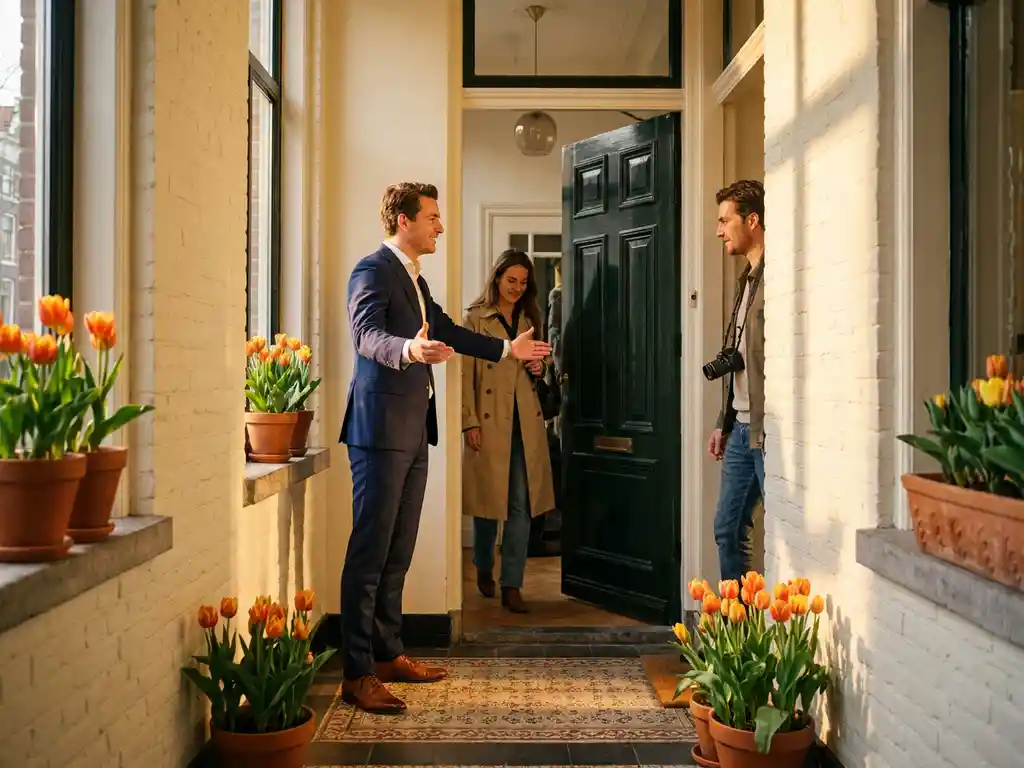
A viewing when selling your home works like this: interested buyers come by appointment to look at your property, accompanied by a real estate agent who presents the home and answers questions. You prepare your home in advance, the viewing typically lasts between 20 and 45 minutes, and afterward comes feedback or an offer. Below, we answer the most frequently asked questions about this process so you know what to expect.
Who can take part in a viewing?
In principle, anyone with a genuine interest in the property can attend a viewing. In practice, these are prospective buyers who have come across your home through an agent, a property platform, or an advertisement and have scheduled an appointment. The agent manages the schedule and ensures that only serious candidates are invited.
As the seller, you don’t need to be present during a viewing. In fact, many agents recommend that you stay away. Buyers feel more comfortable looking around critically and asking questions when the owner isn’t standing there. Your agent takes on the role of host.
Buyers are welcome to bring someone along, such as a partner, family member, or a buyer’s agent. This is perfectly normal. A buyer’s agent pays attention to technical details and pricing aspects that a layperson might easily overlook. Expect buyers with professional guidance to ask more targeted questions.
How long does a viewing typically last?
A standard viewing typically lasts between 20 and 45 minutes. The exact duration depends on the size of the property, the number of questions the buyer asks, and the level of interest. For apartments, half an hour is common; for larger homes or detached houses, it can run up to an hour.
A longer viewing is generally a good sign. Buyers who take their time looking around, return to certain rooms, and ask plenty of questions are often seriously interested. A short viewing doesn’t automatically mean someone isn’t interested, but it does give the agent less opportunity to present the property effectively.
Schedule viewings preferably during the day in natural light. This shows the home at its best and gives buyers an accurate impression of the light, the neighborhood, and the surroundings.
What do buyers expect during a viewing?
During a viewing, buyers expect an honest and complete picture of the property. They want to be able to see every room, including the basement, attic, storage areas, and garden. They also expect answers to questions about the condition of the home, energy performance, service charges, and any known defects.
Specifically, buyers pay attention to the following:
- Condition of the property: are there any visible defects, damp patches, or outdated installations?
- Energy rating and insulation: what are the expected energy costs?
- Layout and sense of space: does the home suit their living needs?
- Natural light and orientation: which direction does the garden face?
- Neighborhood and accessibility: what is the area like, and are there amenities nearby?
Transparency pays off. Buyers appreciate a seller who is open about known defects. Hidden defects can lead to legal claims after the sale, so honesty also protects you as the seller.
How do you prepare your home for a viewing?
You prepare your home for a viewing by ensuring it is tidy, clean, and presented neutrally. Remove personal belongings and clutter, make sure every room is well lit, and leave the home feeling fresh and odor-free. A good first impression starts at the front door.
Follow these steps for the best possible preparation:
- Declutter and depersonalize: remove excess furniture, personal photos, and items that make rooms feel smaller.
- Clean thoroughly: pay extra attention to the bathroom, kitchen, and windows.
- Let in the light: open curtains and blinds, and turn on lights in darker corners.
- Maintain the exterior: mow the lawn, sweep the patio, and make sure the front door looks presentable.
- Fix minor defects: a loose door handle or a blown light bulb will catch buyers’ attention immediately.
- Create a pleasant atmosphere: a fresh scent, a comfortable room temperature, and perhaps some flowers can make all the difference.
Professional photography also helps with preparation: the photos act as a mirror, showing you how the home comes across and highlighting which rooms may still need some attention.
What happens after a viewing?
After a viewing, the agent contacts the interested buyer to gather feedback and gauge whether there is interest in a second viewing or an offer. As a buyer, you typically have a few days to make up your mind before submitting an offer or walking away.
As the seller, you receive feedback from your agent on how the viewing went. This feedback is valuable: it gives you insight into how buyers experience the property and whether there are any areas you can improve before the next viewing.
If a buyer submits an offer, the negotiation phase begins. Your agent will guide you through this and advise you on whether to make a counteroffer or accept. Only once both parties have agreed on the price and terms is a purchase agreement drawn up.
When is a second viewing worthwhile?
A second viewing is worthwhile when a buyer is seriously considering making an offer and wants to look at the property again with more attention to detail. It is a positive sign: it means the first impression was good enough to bring them back.
During a second viewing, buyers typically look at the property through different eyes. While the first viewing is more about the overall impression, the second focuses on specific questions:
- What is the condition of the roof, window frames, or central heating system?
- Does the layout work for the family’s lifestyle?
- What is the neighborhood like at a different time of day?
- Are there any matters that weren’t discussed during the first viewing?
As a seller, it’s wise to prepare just as carefully for the second viewing. Make sure the home looks just as neat as it did the first time. Sometimes a buyer will bring a structural surveyor or contractor to the second viewing to assess the condition of the property. This is perfectly normal and is no cause for concern.
How we help you sell your home
At Urban Homies, we guide you through the entire sales process, from the initial property valuation to the transfer at the notary. We ensure that viewings are planned and conducted professionally, so that you as the seller experience as little stress as possible and your home is presented in the best possible light to serious buyers.
What we take care of for you:
- Property valuation and marketing strategy tailored to the current market
- Professional photography and a compelling listing
- Scheduling and conducting viewings with a dedicated homie
- Negotiations and contract support through to the notary
Want to know what your home is worth and how we approach the sales process for you? Check out our sales service or get in touch directly for a no-obligation conversation.