
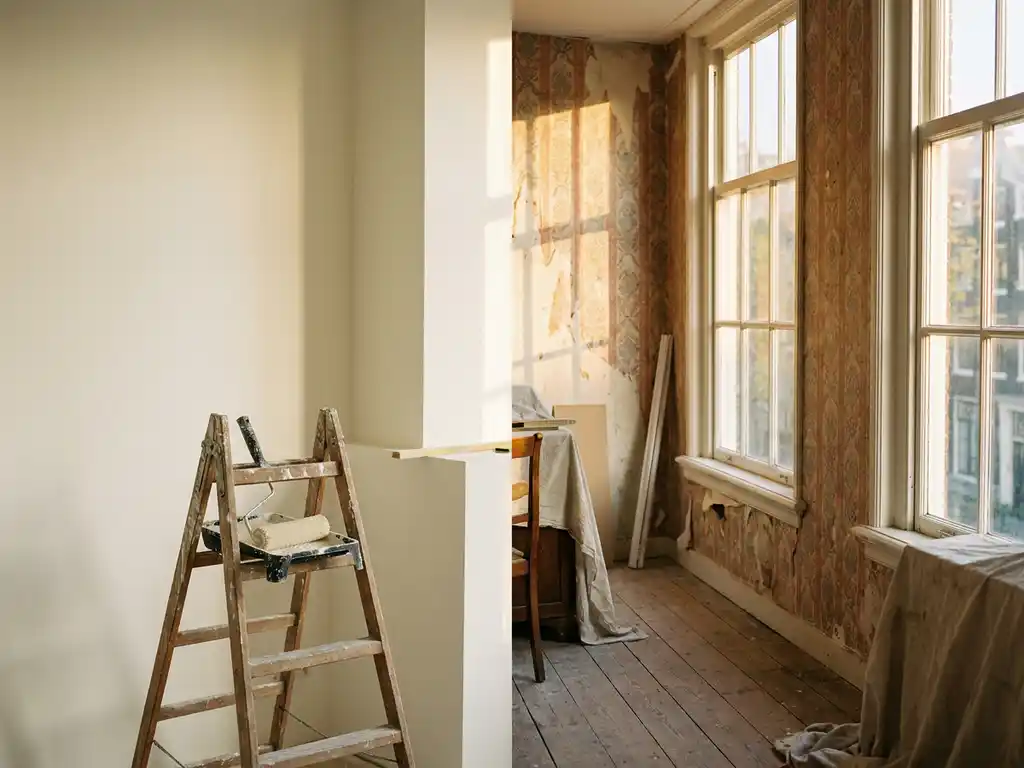
Renovating before selling your home is not always necessary, but in certain cases it can absolutely pay off. Whether it makes sense depends on the condition of your property, the local market, and the type of improvement you’re considering. Small, targeted upgrades often yield a better return than a full-scale renovation. In this article, we answer the most frequently asked questions about renovating and selling your home.
What does renovating add to the sale of your home?
Renovating can increase the sale value of your home, but the impact varies significantly depending on the type of work involved. Minor improvements such as painting, refreshing the bathroom, or replacing outdated kitchen cabinet doors tend to deliver a strong return relative to their cost. Recouping the cost of large-scale renovations is much harder, as buyers are rarely willing to factor the full renovation costs into the price they’re prepared to pay.
What renovating primarily does is lower the barrier for buyers. A well-maintained home attracts more viewings and leads to offers more quickly. Buyers generally don’t want to deal with deferred maintenance right after moving in. A well-presented home inspires confidence, and that translates into a higher offer price or a shorter time on the market.
Presentation also plays a major role. Even without significant renovation work, a freshened-up home with professional photography and styling can look considerably more appealing than a comparable property that appears neglected. It’s not just about what you invest — it’s also about how you present the result.
Which renovations increase the sale value the most?
The renovations that add the most value are those with broad appeal that are immediately visible. Think a fresh coat of paint, a renovated bathroom, a modern kitchen, or improved insulation. Energy-saving measures such as double glazing, roof insulation, or a heat pump are being given increasing weight by buyers in 2026.
An overview of improvements that typically deliver a good return:
- Interior and exterior painting: low cost, high visual impact
- Bathroom renovation: outdated bathrooms put buyers off
- Kitchen update: new cabinet fronts or a new countertop can already make a big difference
- Flooring: replace or sand down damaged or worn floors
- Improving the energy rating: a higher energy rating demonstrably increases market value
- Garden and outdoor space: first impressions count during viewings
Renovations that tend to deliver a poorer return are those driven by personal taste — such as an extension in a specific style or a luxury bathroom that exceeds what the neighborhood’s price range can support. You’ll rarely recoup those costs.
What is the difference between major maintenance and renovating for sale?
Major maintenance means addressing outstanding defects — such as a leaking roof, outdated wiring, or wood rot. Renovating for sale goes further: you’re actively adding value or improving the overall appeal of the property. Both are relevant when selling, but they serve different purposes and have different effects on the sale price.
Failing to address deferred maintenance has a direct negative impact. Buyers and their agents will spot defects during viewings or a structural survey. This leads to lower offers or negotiations over price reductions — and can sometimes cause a sale to fall through entirely.
Renovating for sale is a strategic choice. You’re investing with the specific aim of increasing appeal, not concealing defects. The distinction matters: resolving deferred maintenance is a baseline requirement; renovating is an added extra. Always start with the former before considering the latter.
When is renovating before selling actually not a good idea?
Renovating doesn’t make sense when the costs outweigh the expected added value, when the local market is already tight, or when buyers are likely to make their own changes anyway. In a seller’s market — where demand exceeds supply — homes sell quickly and at strong prices even without major work.
Specific situations where renovating before selling is unlikely to pay off:
- The property is being purchased by an investor or developer who plans to demolish or renovate it anyway
- You have little time available and the renovation risks running over schedule
- Neighborhood price levels won’t support a higher sale price, regardless of how good the property looks
- The renovation reflects your personal taste but not that of the typical buyer in your price segment
- You don’t have sufficient budget to complete the work properly
A half-finished renovation is counterproductive. Buyers see it as a problem, not an advantage. If you’re unsure whether an investment will pay off, request a property valuation before you start.
How do you decide which jobs are worth doing?
You decide which jobs are worth doing by weighing the expected added value against the cost and the time you have available. A simple rule of thumb: choose improvements where the expected increase in value is at least equal to the investment. If in doubt, ask a selling agent for a concrete assessment.
A practical approach:
- Have a valuation carried out based on the current condition of your home
- Make a list of defects that buyers are likely to notice or mention
- Compare similar properties in your area that have sold recently
- Request quotes for the improvement work you’re considering
- Weigh the costs against the expected increase in sale price
Also consider the time involved. If you want to sell quickly, a major renovation that takes weeks to complete makes little sense. In that case, opt for quick, visible improvements that can be done over a weekend.
Do you need to disclose renovations when selling your home?
As a seller in the Netherlands, you are legally required to disclose known defects and relevant information about the property. You are not required to proactively disclose renovations you have carried out, but you are required to disclose any defects you are aware of. This is the legal duty of disclosure, which takes precedence over the buyer’s duty to investigate.
What you need to know in practice:
- Renovations carried out without a permit that required one must be disclosed. This can have legal consequences after the sale.
- If you know that a previous renovation caused defects, you are required to disclose this.
- Having a structural survey carried out before the sale gives you as the seller a clear picture of what needs to be disclosed and protects you after the fact.
Never deliberately conceal defects. If it later comes to light that you were aware of something but failed to disclose it, you risk a damages claim from the buyer. Transparency protects you as a seller and gives buyers the confidence they need to make an offer.
How Urban Homies helps you sell your home
At Urban Homies, we guide you from the first conversation through to signing at the notary. We always start with a thorough valuation of your home in its current condition, so you know exactly what renovating will and won’t achieve. Based on that, we give you concrete advice: which jobs are worth doing, which you can skip, and how to position your home most effectively on the market.
What we take care of for you:
- Tailored valuation and market analysis
- Advice on presentation and potential improvements
- Professional photography and a compelling listing description
- Support throughout negotiations and the sales process
- Aftercare through to the transfer at the notary
Want to know what your home is worth and whether renovating makes sense for you? Get in touch with us for a no-obligation conversation. Or take a look at what our sales guidance service involves.