
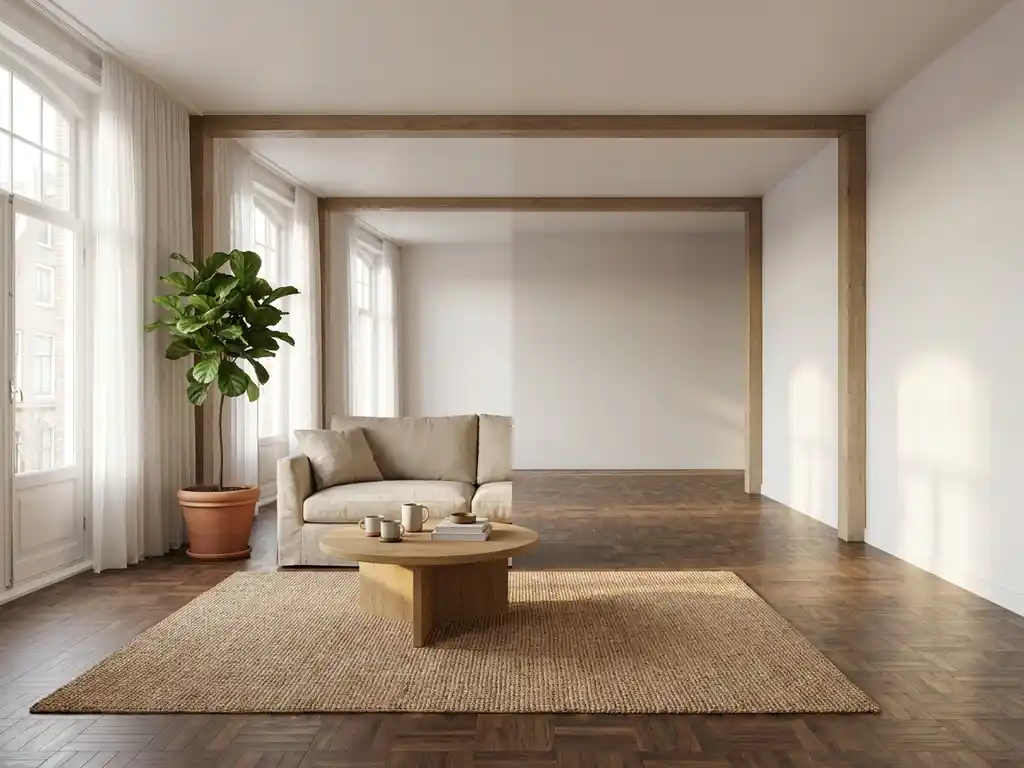
The difference between selling furnished and selling empty comes down to what stays in the home at the time of transfer. With an empty sale, you take all furniture and belongings with you; with a furnished sale, some or all of the furniture stays behind and becomes part of the deal. The right choice depends on your situation as a seller, your target audience, and what you want to get for the furniture. In this article, we answer the most frequently asked questions on this topic.
What legally counts as ‘contents’ in a home sale?
Legally speaking, contents refers to everything that is movable: items you can take with you without damaging the property. This includes furniture, curtains, light fixtures, white goods, and electronics. What is immovable — such as a fitted kitchen, a built-in bathroom cabinet, or a central heating boiler — stays with the property and is included in the sale by default.
The distinction between movable and immovable is not always clear-cut. The law uses the concept of accession for this: if something is permanently attached to the property and is generally considered part of it, it is treated as immovable. A built-in dishwasher or a custom-fitted wardrobe often falls into this category. A freestanding refrigerator or a sofa does not.
In practice, this means that as a seller you need to be clear at every viewing about what you are taking with you and what is staying behind. Ambiguity on this point regularly leads to disputes at the time of transfer. A fixtures and fittings list — commonly known as a list of items — makes this concrete and prevents misunderstandings.
What furniture and belongings are you allowed to take as a seller?
As a seller, you are generally entitled to take all movable items with you: anything that is not structurally fixed to the property. Furniture, artwork, freestanding lighting, standalone appliances, and personal belongings are your property and do not need to be left behind, unless you make written arrangements with the buyer.
There are plenty of grey areas. Consider:
- Curtains and net curtains (movable, but buyers sometimes consider them part of the property)
- Garden furniture and parasols
- Recessed spotlights that can easily be replaced
- Freestanding kitchen appliances such as a microwave or coffee maker
- Outdoor lighting plugged into a socket
The rule of thumb: if you can take it without tools and the property is no worse off without it, you are generally free to take it. But always communicate this in advance. Nothing is more frustrating for a buyer than walking into a home after the transfer and finding that the beautiful living room light has disappeared.
What are the pros and cons of selling furnished?
Selling furnished has both advantages and disadvantages, depending on your situation. The biggest advantage is convenience: you have less to move and the property looks more appealing to certain buyers. The downside is that you have less control over what your furniture is worth, and not every buyer wants someone else’s interior.
Advantages of selling furnished
- Lower moving costs for you as the seller
- The property looks warmer and move-in ready during viewings
- Attractive to buyers who want to move in quickly, such as expats or first-time buyers
- You can include the furniture in the sale price rather than selling it separately or disposing of it
Disadvantages of selling furnished
- Not all buyers want the furniture, which can limit your target audience
- The value of furniture is difficult to assess objectively
- Disputes over exactly what is included in the price can slow down the sales process
- If the furniture is dated, it can make the property less appealing
Does selling furnished or empty affect the sale price?
Yes, the choice between selling furnished or empty can influence the sale price, but not always in the way you might expect. Furniture rarely adds direct value to the official sale price of the property itself. What is possible, however, is a separate payment for the contents on top of the purchase price.
In practice, this is often handled through a movable items list with an associated sum. This amount is separate from the property price and is stated separately in the purchase agreement. This also has tax advantages: movable items are not subject to transfer tax, whereas the immovable value of the property is.
Please note: tax authorities scrutinize situations in which furniture is valued artificially high in order to reduce the official purchase price. Any payment for furniture must be realistic and in line with market value.
How do you record agreements about furniture in the purchase agreement?
Agreements about furniture are recorded in the list of items, an appendix to the purchase agreement. This list specifies for each item whether it is being taken or left behind, and at what price. This prevents disputes at the time of transfer and gives both parties legal certainty.
Here is how to approach this in practice:
- Draw up a complete inventory of all movable items in the property
- Indicate for each item whether it is staying or being taken
- Agree on a realistic value for the items being left behind
- Add this list as an appendix to the purchase agreement
- Have both parties sign the list when signing the purchase deed
The notary incorporates the list into the purchase deed. At the time of transfer, the list can be used as a reference document: everything on it must still be present. If anything is missing, the buyer has a legally valid claim.
When is selling furnished the smartest choice?
Selling furnished makes the most sense when your target audience needs a move-in ready home, when you have no space for or need of the furniture yourself, or when the furniture is of good quality and enhances the property. It is less advisable when the interior is outdated or when you expect it to unnecessarily complicate the sale price.
Situations in which selling furnished works well:
- You are selling an apartment in the city that is popular with expats or young professionals
- You are moving abroad and do not want to take furniture with you
- The furniture is high quality and suits the style of the property
- You want to sell quickly and a move-in ready home attracts more interest
Situations in which selling empty is the better option:
- The buyer wants to furnish the property entirely to their own taste
- The furniture is personal or dated and adds no value
- You want to keep the sale price as straightforward and uncomplicated as possible
How we help with the sale of your home
At Urban Homies, we guide you from start to finish through the process of selling your home. We begin with a property valuation and a targeted market strategy, so you know what your home is worth and how best to present it. This includes professional photography, a tailored listing, and clear advice on matters such as whether to sell furnished or empty.
What we do for you:
- Property valuation and market analysis
- Advice on selling furnished or empty based on your situation
- Support with drawing up the list of items
- Professional presentation and marketing of the property
- Guidance from the initial strategy meeting through to the notary
Want to know the best approach for selling your home? Feel free to contact us for a no-obligation conversation. We are happy to think things through with you.