
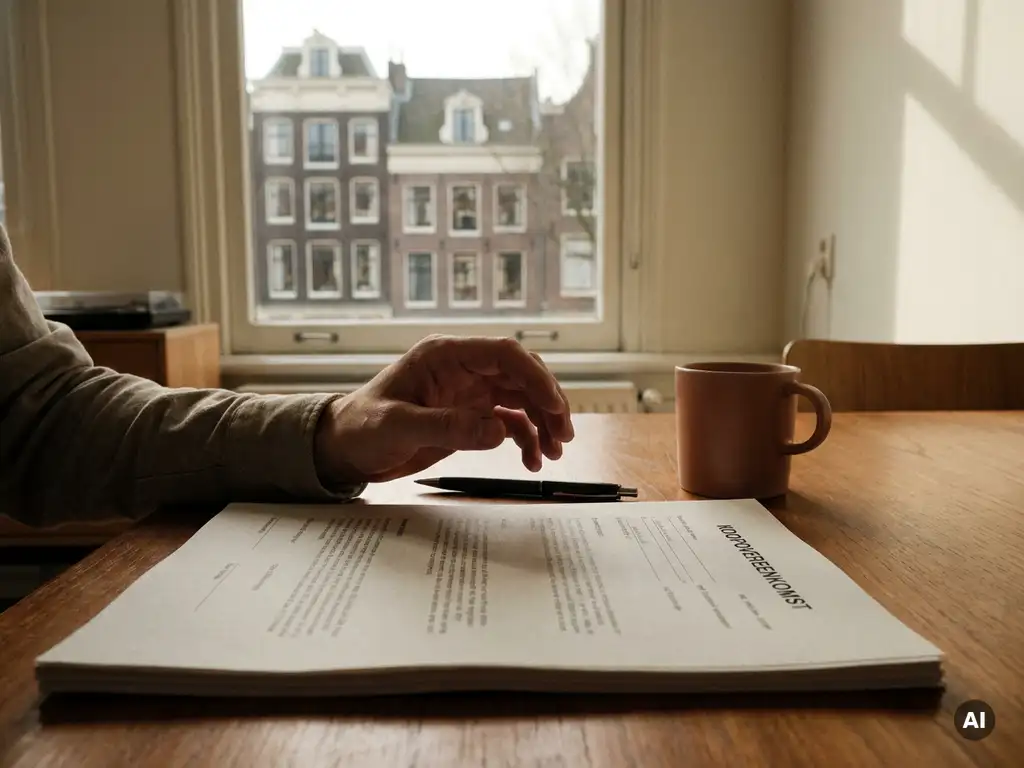
You prevent overbidding by basing your offer on the market value of the property, not on the asking price or the bidding pressure from other buyers. A well-substantiated offer takes into account comparable sale prices in the area, the condition of the property, and what an appraiser would establish as a realistic value. In this article, we answer the most frequently asked questions about overbidding, so you can approach the market with a clear head and a sharp strategy.
How much above the asking price is still acceptable?
How much you can bid above the asking price without overbidding depends on the local market conditions and the actual market value of the property. In popular cities like Amsterdam, buyers in 2026 regularly bid 5 to 15 percent above the asking price. Whether that is acceptable does not depend on the percentage itself, but on whether the offer is in line with what the property is actually worth.
The asking price is not an objective benchmark. Sellers set that price strategically, sometimes deliberately low to trigger a bidding war. A bid of 10 percent above the asking price can be perfectly reasonable if the asking price was below market value, but risky if the property was already priced on the high side.
A rule of thumb: always compare the sale prices of comparable properties in the same neighborhood from the past three to six months. This gives you a realistic picture of what buyers are actually paying, regardless of what sellers are asking.
Need a local Homie?
Share your plans with us and discover how we can help with your home, move or relocation in the Netherlands.
What is the difference between asking price and market value?
The asking price is the amount the seller is requesting; the market value is what a property is objectively worth based on market conditions, location, condition, and comparable transactions. These two amounts can differ significantly. The asking price is a starting point for negotiation; the market value is the limit that you as a buyer do not want to structurally exceed.
Market value is determined by a certified appraiser, who looks at several factors:
- Sale prices of comparable properties in the area
- Floor area, condition of maintenance, and energy label
- Location, accessibility, and neighborhood characteristics
- Current supply and demand in the segment
When you apply for a mortgage, the bank will commission an appraisal. The bank will never finance more than the appraised value, even if you are willing to pay more. That difference must then come out of your own pocket. This makes the distinction between asking price and market value not just theoretical for buyers, but also directly financially relevant.
How do you determine the true value of a property?
You determine the true value of a property by combining three sources of information: recent sales data from comparable properties, a professional appraisal, and a structural survey. None of these sources provides a complete picture on its own, but together they give you a solid basis for a well-substantiated offer.
Analyzing sales data
Through platforms like Funda, you can see at what price comparable properties in the area have recently sold. Pay attention to properties with a similar floor area, year of construction, and condition. Take the date of the transaction into account: the market can shift noticeably within six months.
Appraisal and structural survey
An appraiser establishes the official market value, but a structural survey tells you something different: what are the technical defects and how much will it cost to fix them? If a property has deferred maintenance, that reduces the realistic value you should pay. Always deduct expected repair costs from your maximum bid.
Which bidding strategy reduces the risk of overbidding?
The bidding strategy that most effectively reduces the risk of overbidding is working with a personal maximum bid based on market value, not based on gut feeling or competitive pressure. Set that maximum in advance and stick to it, even if the bidding war escalates.
Concrete steps to help you keep your bid sharp:
- Set your maximum price before the viewing, based on comparable sale prices and a possible appraisal.
- Include a financing contingency in your bid, so you are not locked in if the bank finances less than you offer.
- Have a structural survey carried out or include a structural contingency in your bid, so that hidden defects do not cost you unexpected money.
- Do not bid higher than your maximum in successive rounds, even if you hear that others are close to your bid. Rumors about other bidders are rarely verifiable.
- Work with a buyer’s agent who knows the local market and helps you structure a bid that is strong without being irresponsibly high.
Emotion is the biggest enemy of a good bidding strategy. A property you “just want” feels different from a property that is objectively worth that price. Those two things quickly become confused during a bidding process.
What are the financial consequences of paying too much?
If you pay too much for a property, you face a financial risk on multiple fronts: you have an immediate loss of equity, your mortgage may not cover the full purchase amount, and you have less of a buffer in the event of a future sale.
The most direct consequences at a glance:
- Personal contribution above the appraised value: If you bid 30,000 euros above the appraised value, you must finance that amount entirely yourself. The bank only finances up to the appraised value.
- Residual debt upon sale: If the market drops or if you have to sell the property sooner than planned, you may be left with a residual debt.
- Higher monthly costs: A higher purchase price means a higher mortgage, higher interest costs, and more pressure on your monthly budget.
- Less negotiating room for renovations: If you are already at your maximum, you have less financial room for necessary modifications or maintenance.
Overbidding is not necessarily a disaster, but it becomes risky if you do it without a financial buffer or without a clear understanding of the property’s actual condition.
When is overbidding actually justified?
Overbidding is justified when your bid still falls within or close to the market value, you have your financing fully in place, and you are buying the property for the long term. In a tight market like Amsterdam in 2026, overbidding is often unavoidable, but that does not make it an irresponsible choice as long as you consciously set your limits.
Situations in which overbidding is defensible:
- The asking price is demonstrably below market value, meaning your “overbid” is in fact a market-conforming offer.
- You are buying with a long-term perspective of at least five to seven years, so temporary price fluctuations have less impact.
- You have sufficient personal equity to finance the difference between your bid and the appraised value yourself.
- The location or type of property is scarce, making the prospect of long-term appreciation realistic.
Overbidding becomes irresponsible if you do it because you are afraid of missing out again, if you exceed your financial maximum, or if you skip the survey to appear more attractive to the seller. External pressure is never a good reason to abandon your own limits.
How we help you bid responsibly
At Urban Homies, we guide you from the first conversation all the way to the notary. Our purchase guidance starts with a video call to map out your wishes and financial parameters. We then analyze property files, accompany viewings, and draw up a personalized offer that is strong without being irresponsibly high. We handle all communication with the selling agent, appraiser, structural inspector, and notary, so you can focus on the decision itself.
We know the Amsterdam market and surrounding regions like no other. Whether you are buying a property for the first time or are an international newcomer to the Netherlands: we ensure you sit at the table with a clear head and a well-founded strategy. Get in touch and discover how we can help you buy the right property at the right price.
Need a local Homie?
Share your plans with us and discover how we can help with your home, move or relocation in the Netherlands.