
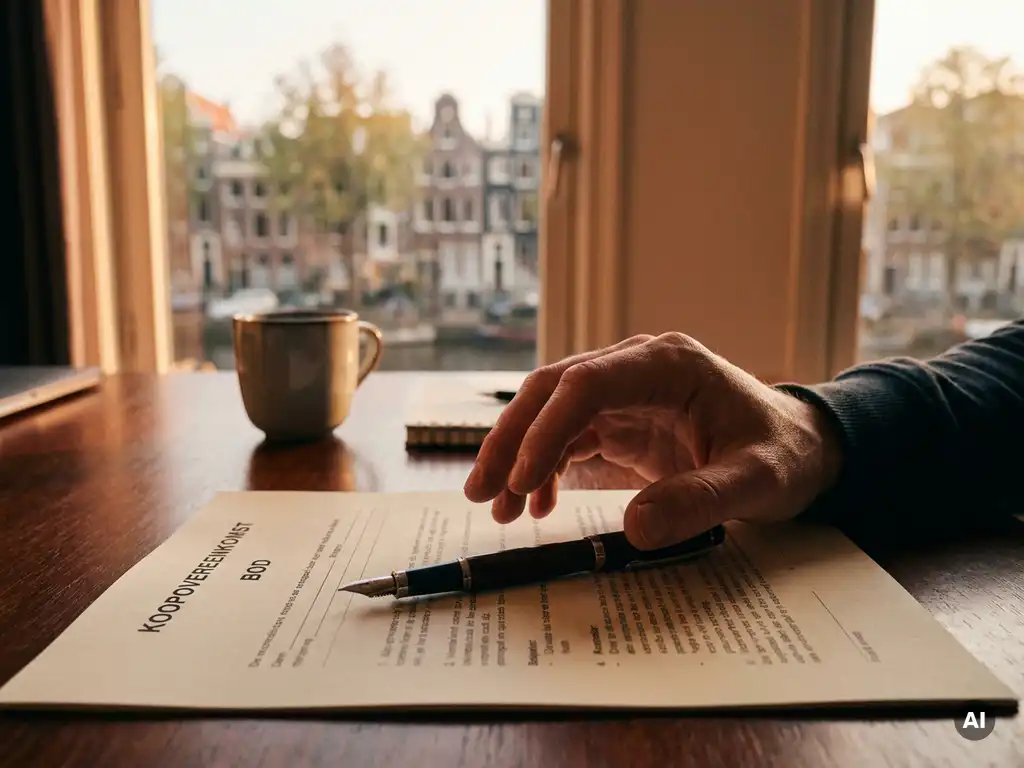
In a bidding war situation, you typically have between 24 and 72 hours to submit an offer. How tight that time pressure feels depends largely on the popularity of the property and how the selling agent structures the bidding process. In this article, we answer the most frequently asked questions about making quick decisions when overbidding, so you are well prepared when the time comes.
How much time do you usually get to submit an offer?
For popular properties in Amsterdam and the surrounding area, you generally have 24 to 72 hours to submit an offer. Some selling agents work with a fixed bidding deadline, while others use an informal timeframe. In a heated market, that timeframe can be even shorter — sometimes less than a day after the viewing.
The selling agent sets the rules. They can opt for a sealed-bid procedure, where all bidders submit an offer simultaneously on a fixed date, or for a private sale where bids come in one after another. With a sealed-bid process, you know in advance when your offer must be submitted. With a private sale procedure, the pressure can be higher, because the seller can decide at any moment who they want to proceed with.
Not sure which system the selling agent is using? Ask immediately after the viewing. This information is public and the agent is required to inform you about it.
What happens if you wait too long to decide?
If you wait too long to make an offer, you run a real risk of the property going to another buyer. The seller is free to enter into negotiations with another party at any time, as long as no signed purchase contract has been completed yet. Waiting does not mean your position is secure.
In practice, there are two concrete risks:
- The property is sold to someone else who acted faster and more decisively, even if your offer might have been higher.
- You miss the bidding deadline, meaning your offer will no longer be considered.
Hesitation is understandable, but in a competitive market, delays often cost you the opportunity. The solution is not to decide faster without thinking, but to prepare yourself as thoroughly as possible in advance so that when the moment arrives, you know what you want to do.
How do you quickly determine what a realistic offer is?
You determine a realistic offer by comparing the asking price with recent sale prices of comparable properties in the same neighborhood. Agents also refer to this as the market value. If you have already done this analysis before the viewing, you can act quickly after the viewing.
Concrete steps to help you quickly determine a realistic offer:
- Look up sale prices of comparable properties through the Kadaster or through your agent.
- Pay attention to the difference between the asking price and the final sale price in the neighborhood — that difference indicates how much properties are overbid on average.
- Factor in the condition of the property — a property that is move-in ready justifies a higher offer than one that still needs renovation.
- Set a maximum amount you are willing and able to pay, including additional costs such as transfer tax and notary fees.
The goal is not to make the highest offer, but the right offer at the right moment. A well-substantiated offer is stronger than an arbitrarily high number.
What information do you need before making an offer?
Before submitting an offer, you need to know at least four things: the market value of the property, your own maximum budget, the condition of the property based on the viewing, and the conditions under which you want to bid — such as a financing contingency or a structural survey contingency.
Make sure you have the following information in order:
- Mortgage capacity: Know in advance how much you can borrow. A mortgage advisor can help you with this, preferably before you start viewing properties.
- Sales information: Read the sales brochure, the energy label, and any homeowners’ association documents thoroughly.
- Structural condition: If the property is older or you have doubts about its condition, ask whether a structural survey report is available or include a contingency in your offer.
- Contingency clauses: Decide in advance whether you want to include a financing contingency and what the timeframe for it will be.
If you have this information ready, you can act quickly and confidently when the moment arrives.
When is it wise to walk away from an offer?
It is wise to walk away from an offer if the price needed to win exceeds your maximum budget, if there are serious doubts about the structural condition of the property, or if the property does not align well with your needs but you are getting swept up in the competition. Overbidding for the sake of overbidding is a common mistake.
Concrete situations where it is better to walk away:
- The asking price is already above market value and the expected overbids make the property structurally too expensive for you.
- You were unable to negotiate a financing contingency but are not certain about your mortgage.
- The viewing raised doubts about the condition of the property and there is no room for a structural survey.
- You feel external pressure, but you yourself do not have a good feeling about the property.
Walking away feels like losing, but it is also a conscious choice to protect your budget and your interests. The next property that comes along is then a new opportunity with a fresh start.
How does a buyer’s agent help with quick bidding decisions?
A buyer’s agent helps you decide quickly and with solid reasoning because they can quickly assess the market value of a property, know the bidding process, and guide you in formulating a realistic offer with the right conditions. You do not have to figure it all out on your own at a moment when the pressure is high.
Concretely, a buyer’s agent takes the following tasks off your hands:
- Analysis of recent comparable sale prices in the neighborhood.
- Assessment of the sales information and identification of risks.
- Advice on the amount of the offer and the contingency clauses to include.
- Communication with the selling agent, so you can focus on the decision itself.
- Guidance through to the notary, including reviewing the purchase contract.
How we guide you through overbidding
At Urban Homies, we guide you from the first conversation through to the key handover. We start with a no-obligation video call to map out your wishes and budget, so that even before the first viewing we know what a realistic offer looks like for you. This saves you valuable time when you need to act quickly.
Our buyer’s guidance includes, among other things:
- Market analysis and valuation per property.
- File analysis and assessment of sales information.
- A personalized offer with the right contingency clauses.
- Full communication with the selling agent, appraiser, and notary.
We work with both Dutch and international buyers in Amsterdam and the surrounding area. Want to know how we can help you with your next offer? Check out our buyer’s guidance or contact us directly.