
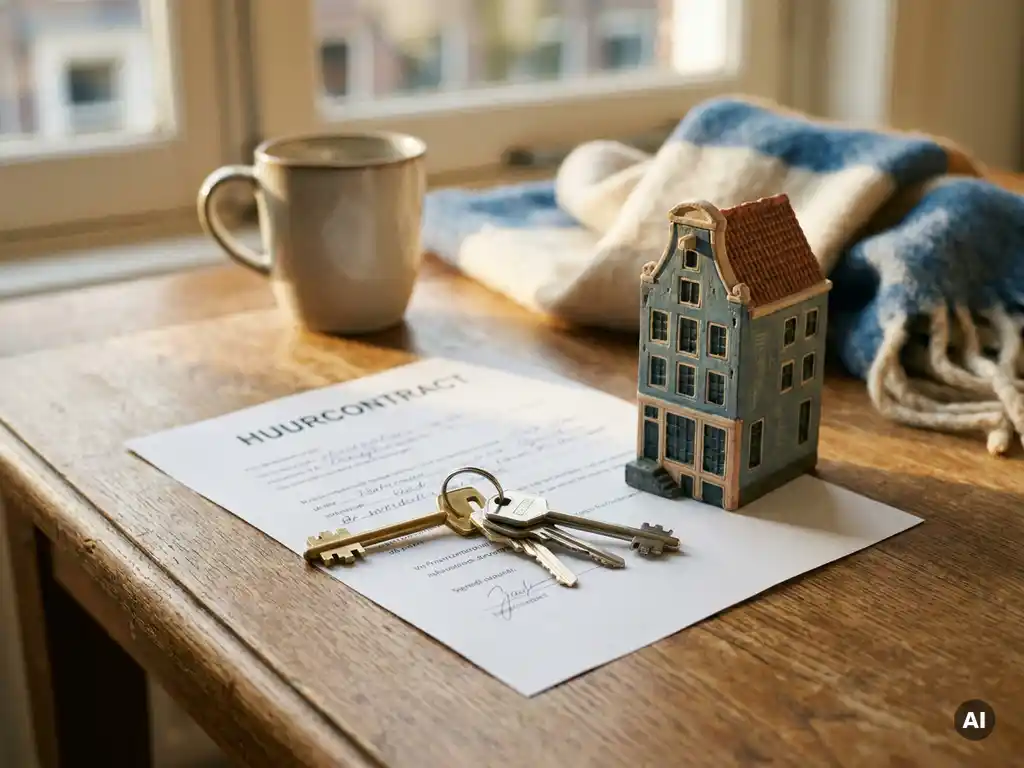
Renting a home in the Netherlands works through a free market where you as a tenant sign a rental agreement with a landlord or through a real estate agent. You generally need a verifiable income, proof of identity, and sometimes an employer’s statement. The process differs significantly from countries like the US or UK, so it pays to be well prepared. In this article, we answer the most frequently asked questions about renting in the Netherlands, from the requirements to finding a home as an expat.
What are the requirements to rent a home in the Netherlands?
To rent a home in the Netherlands, you need a valid proof of identity, proof of income, and often an employer’s statement. Landlords typically require that your monthly income is at least two to three times the monthly rent. If you don’t yet have a Dutch bank account number, this can complicate the process, but it is not always a hard requirement.
For expats moving to the Netherlands, the same basic requirements apply, but there are a few additional points to consider:
- Employment contract or work permit: landlords want certainty about your income and length of stay
- BSN number: you need this to set up utilities and bank accounts, but you can also arrange this after signing the rental agreement
- References or guarantees: some landlords ask for a deposit of one to three months’ rent as additional security
- Valid passport or residence permit: for non-EU citizens, a valid residence status is required
Please note: in the private rental sector, landlords set their own requirements. There is no legally fixed income requirement, but in practice your financial situation must be well documented.
Need a local Homie?
Share your plans with us and discover how we can help with your home, move or relocation in the Netherlands.
What does the rental process in the Netherlands look like step by step?
The rental process in the Netherlands typically proceeds in five steps: searching, viewing, applying, negotiating, and signing. The Dutch rental market, especially in cities like Amsterdam, is competitive, which means speed and preparation make all the difference.
- Searching: use platforms such as Funda, Pararius, or work with a local real estate agent to find available properties
- Viewing: schedule a viewing quickly: popular properties can be gone within a day
- Applying: submit your application with a complete file (proof of income, employer’s statement, ID)
- Negotiating: discuss the rent, start date, and any adjustments to the property
- Signing: sign the rental agreement and pay the first month’s rent plus deposit
After signing, practical matters follow such as registering with the municipality, applying for a BSN number, and connecting utilities. These are steps best tackled as quickly as possible, because without municipal registration you cannot open a bank account or take out health insurance.
What is included in a Dutch rental agreement?
A Dutch rental agreement contains agreements about the rent, the duration of the contract, the deposit, service charges, and the mutual rights and obligations of the tenant and landlord. In the Netherlands, rental agreements are legally regulated through the Civil Code, which gives tenants a number of basic rights.
The most common elements of a rental agreement are:
- Rent and service charges: the base rent plus any costs for gas, water, electricity, or shared spaces
- Duration of the contract: temporary (maximum two years for independent properties) or indefinite
- Deposit: usually one to three months’ base rent, to be returned after departure provided there is no damage
- House rules: think of rules about pets, subletting, or smoking
- Notice period: typically one month for the tenant, longer for the landlord
Always read the contract carefully before signing. If the contract is drawn up in Dutch and you don’t have a good command of the language, have it translated or checked by a professional.
How much does it cost to rent a home in the Netherlands?
Rental prices in the Netherlands vary greatly by region, property type, and market segment. In Amsterdam, a single room can easily cost 900 to 1,500 euros per month, while a family home in the private sector can cost between 2,000 and 3,500 euros per month. Outside the Randstad, prices are considerably lower.
In addition to the monthly rent, there are one-time and recurring costs to take into account:
- Deposit: one to three months’ rent, paid once at the start
- Agency fees: sometimes applicable in private rentals, although this has been legally restricted
- Service charges: variable, depending on what the landlord charges
- Utilities: gas, water, and electricity are generally not included
In 2026, new rules regarding rent price protection are also in effect. The mid-range rental segment (properties with a rent between the social housing threshold and approximately 1,100 euros) is now subject to regulated maximum prices. This particularly affects the market for first-time renters and expats with an average income.
What is the difference between the private rental sector and social housing?
The difference between the private rental sector and social housing lies in the rent price and accessibility. Social housing has a maximum rent price (the liberalization threshold) and is intended for people with a lower income: you generally have to wait a long time. The private rental sector has no maximum rent price and is accessible to everyone, but the market is more competitive and more expensive.
Social housing: for whom and how long is the wait?
Social housing in the Netherlands is distributed through housing corporations. You register on a waiting list, and the waiting time in Amsterdam can run to ten years or more. For expats staying in the Netherlands temporarily, social housing is rarely a practical option. In addition, income requirements apply: your income may not exceed a certain limit to qualify.
Private rental sector: flexible but more expensive
The private rental sector, also known as the liberalized rental sector, offers more flexibility in terms of contract duration and choice of property. For expats moving to the Netherlands, this is almost always the segment they end up in. Rent prices are in line with the market, and the quality of properties is generally higher. Here, the faster you respond and the stronger your file, the greater your chances.
How do expats find a rental property in the Netherlands?
Expats find a rental property in the Netherlands through online platforms, local real estate agents, or through their employer. The most widely used platforms are Funda and Pararius, but the supply for expats sometimes moves faster than you can respond. Working with a local real estate agent or relocation specialist gives you an advantage in a tight market.
A few practical tips for expats looking for a property:
- Prepare your file: make sure your proof of income, employment contract, and identity documents are immediately available
- Respond quickly: in Amsterdam, sought-after properties can be gone within 24 hours
- Consider temporary accommodation: a short-term accommodation gives you the space to search at your own pace without pressure
- Engage local expertise: someone who knows the market can negotiate on your behalf and avoid pitfalls
- Watch out for fraud: never rent a property without a viewing and never pay a deposit without a valid contract
For non-EU expats, it is also useful to start the IND procedure and visa application process early, so that your residence status is arranged before you sign the rental agreement.
How Urban Homies helps you with renting in the Netherlands
At Urban Homies, we guide expats and international professionals from start to finish in finding and renting a property in the Netherlands. We connect you with a personal ‘homie’, a local expert who knows your situation, negotiates on your behalf, and guides you through practical matters such as municipal registration, BSN application, and utilities. Whether you organize your move yourself or it goes through your employer, we make sure you never feel alone in the process.
Our services include, among other things:
- Personalized property search tailored to your wishes and budget
- Negotiations with landlords and contract review
- Guidance through immigration procedures, including IND and BSN
- Practical support upon arrival: pickup service, welcome package, and utilities
- Collaboration with notaries, lawyers, and mortgage advisors for legal and tax advice
Ready to make your move to the Netherlands stress-free? Get in touch and we’ll discuss together how we can best help you.
Need a local Homie?
Share your plans with us and discover how we can help with your home, move or relocation in the Netherlands.