
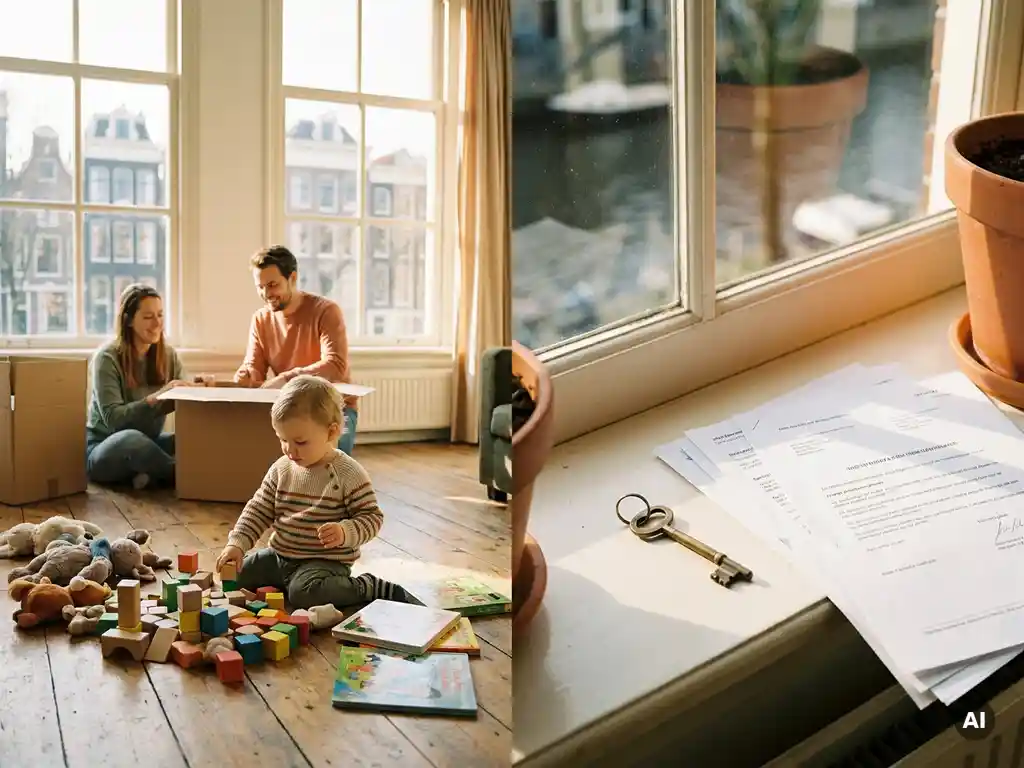
As an expat in the Netherlands, you are entitled to childcare allowance (kinderopvangtoeslag), provided you meet certain conditions. The allowance is a government contribution toward the cost of childcare and is also available to international professionals who work and pay taxes here. In this article, we answer the most frequently asked questions about childcare allowance for expats, from the application process to what happens when you leave the Netherlands.
Who is eligible for childcare allowance?
You are entitled to childcare allowance if you live, work, and pay taxes in the Netherlands, have a child attending a registered childcare facility, and hold a DigiD and BSN. For expats, a valid residence permit is required if you come from outside the EU. Both you and your partner (if applicable) must be working, studying, or following a pathway toward employment.
An important point for expats: you must be socially insured in the Netherlands. In most cases, this is automatic if you work here under a Dutch employment contract. If you work through a foreign employer who has seconded you to the Netherlands, the situation may be different. Check this carefully with your employer or a tax advisor.
Expats from EU countries generally have the same rights as Dutch citizens. For non-EU expats, additional requirements apply regarding the type of residence permit. For example, a residence permit for paid employment generally does entitle you to the allowance, whereas a residence permit for study does not.
Need a local Homie?
Share your plans with us and discover how we can help with your home, move or relocation in the Netherlands.
How much is the childcare allowance for expats?
The amount of childcare allowance depends on your household income and the number of hours your child attends childcare. The government reimburses a percentage of the costs up to a maximum hourly rate. The lower your income, the higher the reimbursement percentage. For 2026, updated income thresholds and maximum hourly rates apply, which you can check via the Belastingdienst.
The allowance never covers the full cost. You always pay a personal contribution. The maximum hourly rate reimbursed by the government differs by type of childcare:
- Day care (kinderdagverblijf): for children aged 0 to 4
- Out-of-school care (BSO): for children aged 4 to 13
- Guest parent care (gastouderopvang): care provided by a host parent through an intermediary agency
Costs above the maximum hourly rate are paid entirely by you. If you choose childcare that is more expensive than the maximum, your personal contribution can add up quickly. It pays to compare options carefully in advance, especially since childcare in Amsterdam and other major cities tends to be relatively expensive.
How do you apply for childcare allowance as an expat?
You apply for childcare allowance through the Belastingdienst website (toeslagen.nl). You will need a DigiD and a BSN. It is best to apply as soon as possible after childcare begins, because the allowance is only paid from the month of application — not retroactively.
These are the steps involved:
- Make sure you have a BSN. You can request this at the municipality or through an expat center.
- Apply for a DigiD via digid.nl. This takes a few working days.
- Check that the childcare provider is registered in the National Register of Childcare (LRK).
- Log in to toeslagen.nl and apply for the childcare allowance.
- Enter your estimated annual income. You can adjust this later if your income changes.
Many expats encounter practical obstacles during these steps, such as applying for a DigiD from abroad or uncertainty about their BSN status. Make sure these matters are in order before your child starts childcare.
Which types of childcare are covered?
Childcare allowance only applies to care provided by a registered provider. This means the childcare facility must be listed in the National Register of Childcare (LRK). Informal care by family members or a neighbor does not qualify and is not reimbursed.
The three covered types are:
- Day care: care for children under 4, typically on weekdays during the day
- Out-of-school care (BSO): for school-age children before and after school and during holidays
- Guest parent care (gastouderopvang): care by a host parent affiliated with an accredited host parent agency
As an expat, it is wise to check immediately when searching for childcare whether the provider is listed in the LRK. You can do this easily via the register’s website. If a childcare provider is not listed, you are not entitled to the allowance for those costs, regardless of how professional the care is.
What happens to the allowance if your income or situation changes?
Childcare allowance is based on an estimate of your annual income. If your income or situation changes, you must report this to the Belastingdienst as soon as possible. If you do not, you risk having to repay excess allowance at the end of the year.
Situations you must always report include:
- A salary increase or decrease
- A change in the number of childcare hours
- Your partner stops working (which affects your entitlement)
- Your child switches childcare providers or stops attending childcare
- You move to a different municipality
You report changes through the same portal at toeslagen.nl. At the end of the year, the Belastingdienst settles the final amount based on your actual income. Keep this in mind in your financial planning, as repayments can be substantial if estimates differ significantly from reality.
Do you lose childcare allowance when you leave the Netherlands?
Yes, you lose your entitlement to childcare allowance as soon as you permanently leave the Netherlands. The allowance is tied to your place of residence and tax liability in the Netherlands. Report your departure to the Belastingdienst as soon as possible to avoid having to repay excess allowance later.
If you are temporarily abroad but retain your official registered address in the Netherlands, you generally retain your entitlement to the allowance. If the absence is for a longer period, or if you deregister from the municipality, your entitlement lapses. Always report your deregistration from the municipality to the Belastingdienst as well, since the two are linked.
If you leave partway through the year, the Belastingdienst will subsequently calculate what you were actually entitled to. You may receive a partial refund or be required to repay, depending on what has already been paid out.
How we help with arranging childcare allowance and more
Moving to the Netherlands involves many practical matters: applying for a BSN, registering with the municipality, finding the right childcare, and figuring out what you are entitled to. At Urban Homies, we guide expats through this entire process. We work with tax specialists and immigration advisors who can help you with questions about allowances, tax liability, and your residence status. This way, you can be sure you don’t miss anything when arranging your expat housing and settling into life in the Netherlands.
Whether you are just starting to plan or are already on your way to your new life in Amsterdam or another Dutch city, we are ready to make the process as smooth as possible. From BSN applications and municipal registration to finding the right childcare in your neighborhood. Get in touch and discover how we handle your move to the Netherlands in a personal and stress-free way.
Need a local Homie?
Share your plans with us and discover how we can help with your home, move or relocation in the Netherlands.