
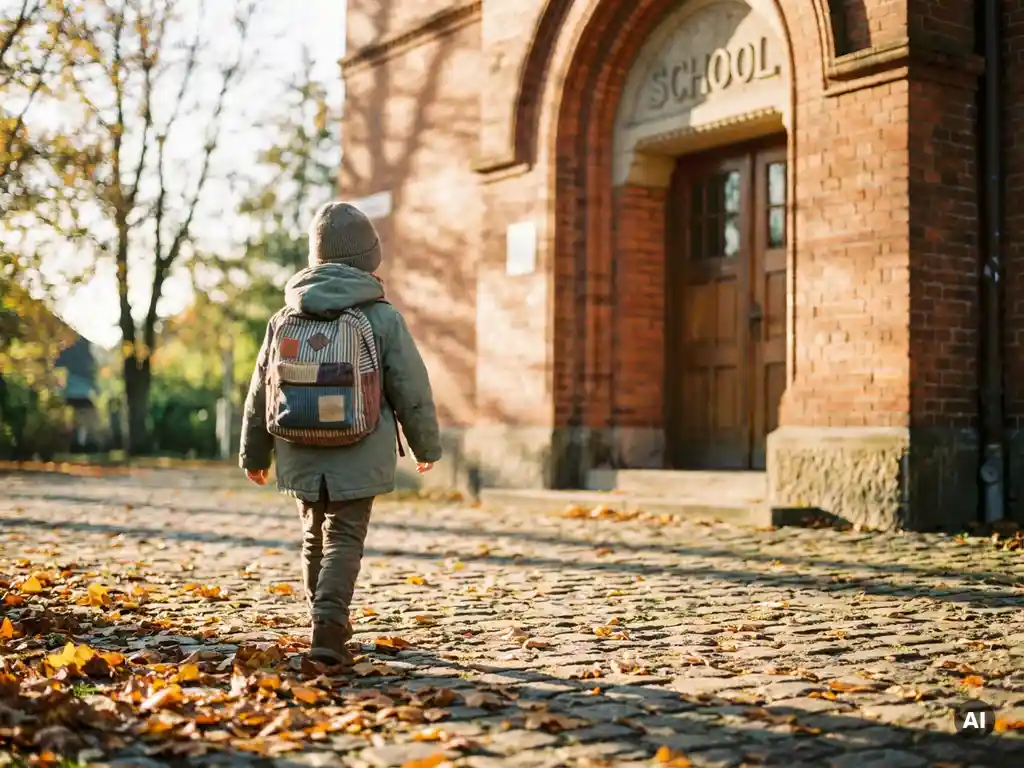
Yes, foreign children are allowed to attend a Dutch school. The Netherlands has compulsory education laws that apply to all children living in the country, regardless of their nationality or residency status. Both regular Dutch schools and international schools are available for expat children, depending on your situation, budget, and how long you plan to stay in the Netherlands.
For many families relocating to the Netherlands, choosing the right school is one of the first and most important practical decisions. In this article, we answer the most frequently asked questions about education for expat children in the Netherlands.
What schools are available for expat children in the Netherlands?
Expat children in the Netherlands can choose from three types of schools: regular Dutch public or private schools, international schools with an international curriculum, and bilingual schools. The best option depends on your child’s age, how long you plan to stay in the Netherlands, and whether your child already speaks Dutch.
Regular Dutch schools provide education in Dutch and are free for all children living in the Netherlands. They follow the Dutch curriculum and are a good choice if you plan to stay longer and want your child to fully integrate. Many schools also offer additional language support for newcomers.
International schools provide education in English or another language and follow an international curriculum such as the International Baccalaureate (IB) or the British or American school system. They are popular among expat families who are temporarily based in the Netherlands or want to prepare their children for an international academic career. The downside is that they are considerably more expensive than regular schools.
Bilingual schools (also known as TTO schools) offer a mix of Dutch and English education and serve as a middle ground for families who want to combine integration with international preparation.
Need a local Homie?
Share your plans with us and discover how we can help with your home, move or relocation in the Netherlands.
Are foreign children required to attend school in the Netherlands?
Yes, foreign children living in the Netherlands are required to attend school. Dutch compulsory education laws apply to all children between the ages of 5 and 16 who are registered with a Dutch municipality, regardless of their nationality. Children from the age of 4 may already attend school, but are not yet formally subject to compulsory education.
Once you register your child with the municipality (the so-called municipal registration), the compulsory education requirement takes effect. As a parent, you are legally obligated to ensure that your child is enrolled in a recognized school. This also applies to children of expats who are temporarily living in the Netherlands, as long as they are officially registered here.
Children older than 16 fall under the qualification obligation, meaning they are required to obtain a basic qualification, unless they already hold a diploma. In practical terms, this means that older teenagers are in principle required to attend school until they have obtained a diploma at a minimum level of MBO level 2, HAVO, or VWO.
How do you enroll a foreign child in a Dutch school?
To enroll a foreign child in a Dutch school, you first contact the desired school to check availability. You then provide the required documents, including proof of registration with the municipality, a valid form of identification, and your child’s previous school records. The school then arranges the placement.
The steps in the enrollment process are typically as follows:
- Register with the municipality and apply for a BSN for yourself and your child.
- Choose a school that suits your child’s age, language proficiency, and needs.
- Contact the school to inquire about available places.
- Submit the required documents, such as proof of address, passport or ID, and any previous school reports.
- Complete the intake process, as some schools conduct a placement interview or language assessment to determine the appropriate level.
For children who speak little or no Dutch, many schools refer them to an International Transition Class (ISK). This is a specialized reception class that prepares children for entry into the regular Dutch education system.
What is an International Transition Class and when is it needed?
An International Transition Class (ISK) is a specialized educational program for newcomers between the ages of 6 and 18 who speak little or no Dutch. In an ISK, children receive intensive Dutch language instruction and are prepared for entry into the regular Dutch education system. An ISK is intended as a temporary stepping stone, usually lasting between six months and two years.
An ISK is useful when your child does not yet have a command of the Dutch language and a direct transition into a regular classroom would be too large a step. The classes are small, the support is intensive, and the program is focused on helping children connect with peers in the regular education system as quickly as possible.
Not all municipalities have an ISK. In larger cities such as Amsterdam, Haarlem, and Amstelveen, ISK programs are available, but the situation may differ in smaller municipalities. Contact the municipality or the school to find out which options are available in your area.
Children who already speak sufficient Dutch or who attend an international school do not need to follow an ISK. The ISK is specifically intended for children entering the regular Dutch education system without knowledge of Dutch.
What are the costs of an international school in the Netherlands?
The costs of an international school in the Netherlands vary considerably, but on average range between €10,000 and €30,000 per year per child. Some leading international schools in Amsterdam charge even higher fees. Regular Dutch schools are free, with the exception of small voluntary contributions for activities.
The exact costs depend on:
- The type of school and curriculum (IB, British, American, or another international system)
- Your child’s age and year group
- Additional costs such as enrollment fees, materials, and extracurricular activities
- Whether your employer covers part of the school fees as part of your expat package
Many international companies and employers cover school fees for expat employees as part of the relocation package. It is advisable to discuss this before you move to the Netherlands, so you know what to expect. If you are coming to the Netherlands as a self-employed person or without employer reimbursement, a regular or bilingual school is considerably more financially accessible.
Which international schools are there in and around Amsterdam?
Amsterdam and the surrounding region are home to several well-known international schools that are popular among expat families. The most notable are the Amsterdam International Community School (AICS), the British School of Amsterdam, the International School of Amsterdam (ISA) in Amstelveen, and the Amity International School Amsterdam. These schools provide education in English and follow international curricula.
An overview of frequently chosen international schools in the Amsterdam region:
- International School of Amsterdam (ISA) in Amstelveen: offers IB education from kindergarten through secondary school
- Amsterdam International Community School (AICS): IB school in Amsterdam with a diverse international community
- British School of Amsterdam: follows the British national curriculum for children aged 3 to 18
- Amity International School Amsterdam: American curriculum with an international school community
- The Japanese School of Amsterdam and other language-specific schools for specific nationalities
In addition to international schools, Amsterdam also has a number of bilingual schools (TTO) that offer a combination of Dutch and English. These are a good alternative for families who want to combine integration with an international approach, and are considerably less expensive than fully international schools.
How we help with arranging schooling and relocation to the Netherlands
Finding a school for your children is one of the first practical steps in expat housing in the Netherlands, but it is rarely the only challenge. Municipal registration, BSN application, negotiating a rental contract, and arranging utilities all come into play. That is precisely why we at Urban Homies guide you through the entire process, from the initial orientation to the moment your family is fully settled.
Our personal approach means you are matched with a dedicated Homie who knows your situation and thinks proactively alongside you. We help you search for a home in the right neighborhood, taking into account proximity to schools that are a good fit for your children. We also work together with immigration experts for IND procedures, visas, and all associated documentation, so you can focus on the things that truly matter.
- Personal intake interview and needs assessment
- House hunting with attention to school locations and neighborhoods
- Support with municipal registration and BSN application
- Guidance through IND procedures and visa applications for non-EU expats
- Assistance finding the right school for your children
Want to find out how we can make your move to the Netherlands as smooth as possible? Get in touch and we will tell you exactly what we can do for you and your family.
Need a local Homie?
Share your plans with us and discover how we can help with your home, move or relocation in the Netherlands.