
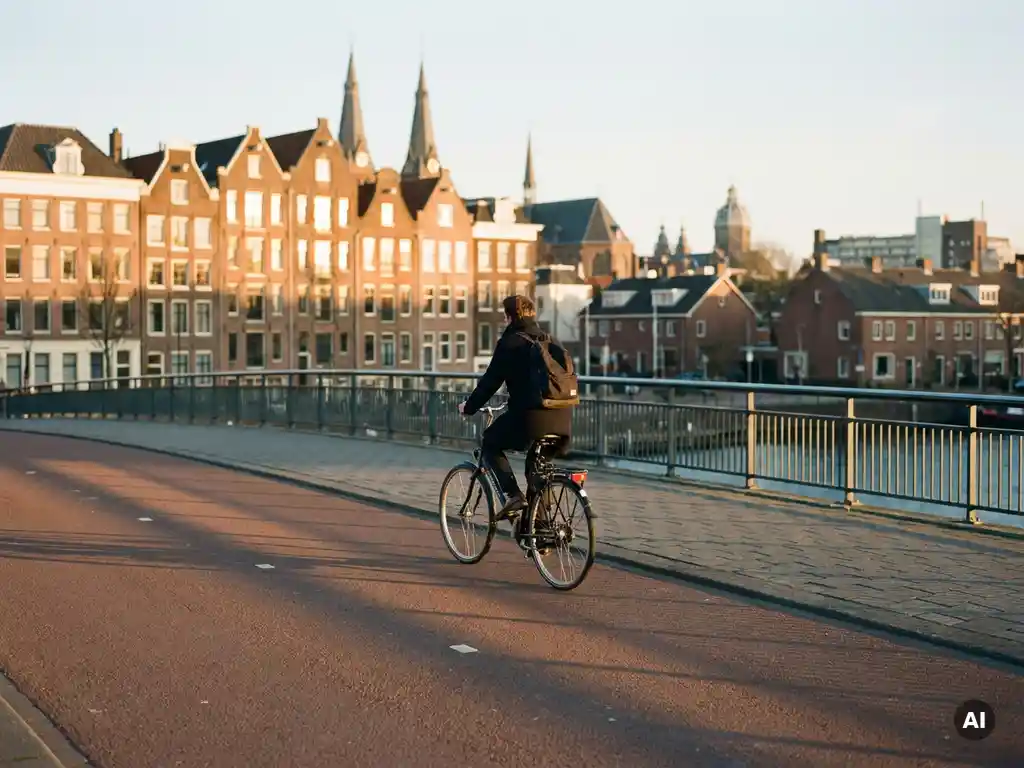
Yes, you can absolutely live outside Amsterdam and work in Amsterdam. Many people do this daily from cities like Haarlem, Almere, Utrecht, or Amstelveen. The combination works well as long as the commute time is acceptable and your housing preferences don’t align with what Amsterdam offers. In this article, we answer the most frequently asked questions about living outside Amsterdam when you work there.
How far from Amsterdam can you live if you work there?
There is no official limit to how far from Amsterdam you can live if you work there. In practice, most commuters use a travel time of 45 to 60 minutes one way as a comfortable threshold. That is a personal choice, not a legal requirement. How far you go depends on your tolerance for commuting, how often you need to be in the office, and your living situation.
By train, you can reach Amsterdam Centraal from Utrecht in about 30 minutes, from The Hague in 50 minutes, and from Eindhoven in just over an hour. The Dutch rail network is well developed, making longer distances relatively manageable. If you work hybrid, this expands your options further: you don’t need to commute every day and can deliberately choose a location that suits your lifestyle and budget.
Need a local Homie?
Share your plans with us and discover how we can help with your home, move or relocation in the Netherlands.
Which cities outside Amsterdam are popular with commuters?
The most popular cities for people who work in Amsterdam but don’t live there are Haarlem, Amstelveen, Almere, Utrecht, and Zaandam. These places combine good connections to Amsterdam with more space, greenery, or lower rents. Each has its own character and attracts a different type of resident.
- Haarlem: Popular for its historic atmosphere, charming city center, and direct train connection to Amsterdam (around 15 minutes). Rents are lower than in Amsterdam, though the gap has been narrowing in recent years.
- Amstelveen: Directly bordering Amsterdam Zuid, easily accessible by metro or bus. Particularly popular among expats due to its international community and good international schools.
- Almere: More spacious, more modern, and noticeably cheaper than Amsterdam. By train, you can reach Amsterdam Centraal in around 20 minutes. Ideal for families who want more space.
- Zaandam: Just 15 minutes from Amsterdam Centraal, with a growing housing supply and a character of its own.
- Utrecht: A popular choice for people who also want to keep the option open of working elsewhere in the Netherlands. The city has a vibrant center and good international connections.
Is living outside Amsterdam cheaper than living in the city?
Yes, living outside Amsterdam is in most cases cheaper than in the city itself. Rental and purchase prices in Amsterdam are among the highest in the Netherlands. Outside the city, especially more than 20 kilometers away, housing costs are noticeably lower. The difference is greatest when you look at the price per square meter and the available space.
Do keep in mind additional costs. A monthly public transport pass or the costs of driving add up to your total housing expenses. For expats looking for expat housing, it is wise to compare total monthly costs, not just the rent. Cities like Almere and Zaandam offer the largest price differences compared to Amsterdam, while Haarlem and Amstelveen are closer to Amsterdam’s price level.
What are the disadvantages of living outside Amsterdam when you work there?
The biggest disadvantage is the daily commute time. Commuting costs energy and time, and disruptions to public transport or traffic jams on the motorway can quickly cause delays. People who need to be in the office every day may find this becomes tiring over time, especially if the one-way journey takes more than 45 minutes.
Other disadvantages to keep in mind:
- Less spontaneity: Grabbing a drink in the city after work or a spontaneous outing is less straightforward when you still have a journey home ahead of you.
- Higher travel costs: Depending on your employer, these may be reimbursed, but that is not always the case.
- Fewer urban amenities: Not every city outside Amsterdam offers the same range of international supermarkets, schools, or cultural activities, which can be a relevant point for expats.
- Social integration: If your colleagues and social life are in Amsterdam, living outside the city can make it harder to build a network quickly.
How do you handle registration if you live outside Amsterdam but work there?
If you live outside Amsterdam but work in Amsterdam, you register with the municipality where you actually live, not where you work. This is a legal requirement in the Netherlands. Your municipal registration is linked to your home address, and based on this you also receive your BSN number, which you need for work, taxes, and health insurance.
In practice, it works like this: you register with the municipality of your place of residence, bring a valid ID and proof of your home address (such as a rental contract), and apply for your registration and BSN there. For expats moving to the Netherlands from abroad, this is one of the first steps that needs to be arranged after arrival. Working for a company in Amsterdam but living in Haarlem or Almere? Amsterdam has nothing to do with your registration.
When is it smart to live in Amsterdam itself?
Living in Amsterdam itself makes sense if you are in the office every day, want an active social life in the city, or don’t want to lose time commuting. Also for people who have just arrived in the Netherlands and want to settle quickly, Amsterdam as a place of residence offers practical advantages: everything is nearby, the expat network is large, and the city has many international amenities.
Consider living in Amsterdam if one or more of the following situations apply to you:
- You work five days a week at a fixed location in the city.
- You don’t have a car and don’t want to depend on train schedules.
- You want to build a social network quickly in an international environment.
- You are temporarily in the Netherlands and want to deal with as few logistical matters as possible.
- Your employer does not reimburse travel costs and the commute time does not outweigh the lower rent elsewhere.
Living in Amsterdam comes with higher costs, but in some situations it is simply the most practical choice. Especially if you are just starting out with moving to the Netherlands and still getting to know the city.
How we help with your move to Amsterdam and the surrounding area
Whether you choose a home in Amsterdam itself or prefer to live outside the city, the first steps when moving to Amsterdam are the same for everyone: finding a suitable home, registering with the municipality, arranging your BSN, and settling in a new country. That is a lot at once, especially when organizing this from abroad.
At Urban Homies, we guide you through this entire process. We match you with a personal homie who knows the local market, whether you are searching in Amsterdam, Amstelveen, Haarlem, or Almere. We handle the housing search, negotiate the rental contract, assist you with municipal registration and BSN application, and for non-EU expats also with the IND procedure. That way, you only need to focus on your new job and your new life.
- Personal intake interview and needs assessment
- Guided housing search in Amsterdam and surrounding cities
- Support with registration, BSN, and immigration procedures
- Practical assistance upon arrival: utilities, welcome package, and more
Want to know what the best option is for your situation? Get in touch and we will help you with an approach that fits your wishes and planning.
Need a local Homie?
Share your plans with us and discover how we can help with your home, move or relocation in the Netherlands.