
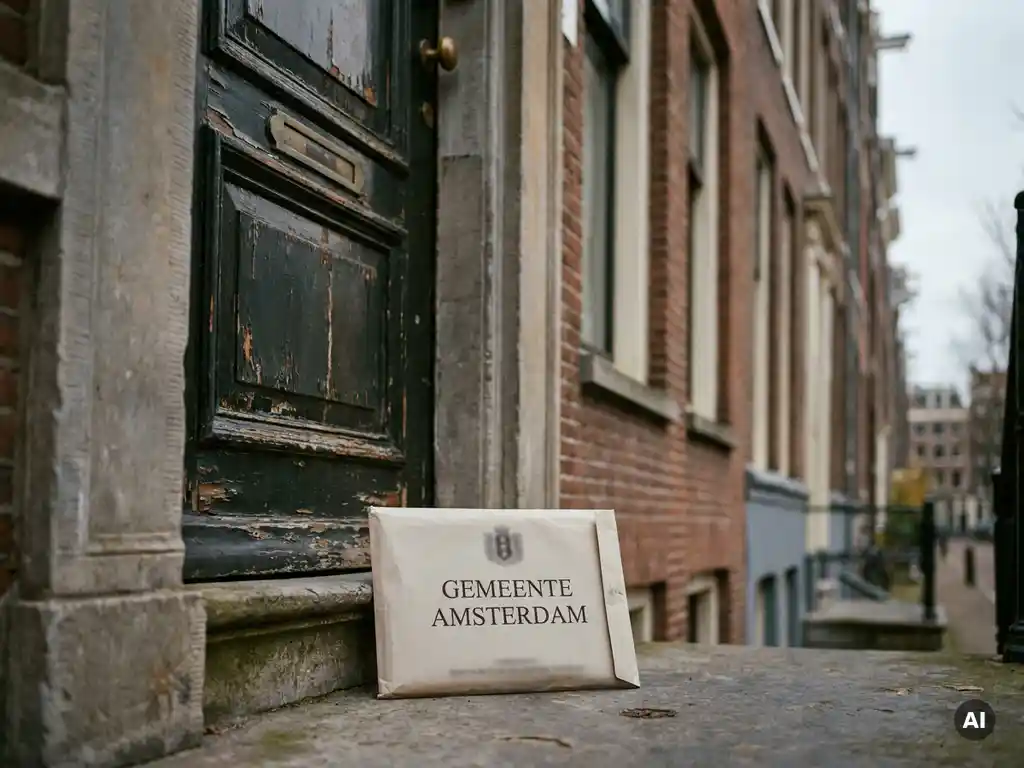
You can register with the municipality without a rental contract, but only if you can provide an alternative proof of address. The municipality accepts other documents in certain situations, such as a declaration from the owner or main tenant of the property. This applies to many expats who move to the Netherlands and have not yet signed a definitive rental contract. Below you can read exactly which documents you need, what alternatives are available, and what the consequences are if you postpone registration.
Which documents do you need for municipal registration?
For municipal registration in the Netherlands, you generally need a valid identity document and proof of address. The identity document is a passport or ID card. The proof of address demonstrates that you actually live at the stated address. Without this second document, the municipality will typically not process your registration.
The standard documents that municipalities accept as proof of address are:
- A rental contract in your name
- A deed of sale or proof of ownership
- A written consent declaration from the owner or main tenant
- A signed sublease agreement
Keep in mind that each municipality has its own rules. Amsterdam sometimes asks for additional information, while smaller municipalities may be more flexible. Always check the specific requirements of the municipality where you want to register via its official website or call the Civil Affairs department.
What counts as proof of address if you don’t have a rental contract?
If you don’t have a rental contract in your name, the municipality accepts a written declaration from the owner or main tenant as proof of address. In this declaration, the property owner or tenant confirms that you live at that address. This document generally needs to include a signature and sometimes also a copy of the declaring person’s identity document.
Other situations in which you can still register without your own rental contract:
- Living with family or friends: The main occupant writes a declaration stating that you live with them.
- Temporary accommodation through an employer: An official letter from the employer may suffice in some municipalities.
- Short-stay or furnished rental: If the landlord is willing to sign a declaration, this also counts.
- Anti-squat property or shared housing: A declaration from the manager or co-resident can sometimes be submitted.
Important: the municipality reserves the right to verify the stated living situation. If it turns out you do not actually live at the address, the registration may be refused or reversed.
Can a landlord or main tenant register you at their address?
No, a landlord or main tenant does not register you with the municipality themselves. You do that yourself. What the landlord or main tenant can do is draw up a written consent declaration with which you can register at their address. You then submit this declaration to the municipality, together with your identity document.
Some landlords refuse to give permission for registration, for example because they fear legal consequences under tenancy law or because the property has not officially been designated as an independent dwelling. This is a common problem for expats moving to the Netherlands who are staying somewhere temporarily. In that case, you can ask the municipality for advice about alternative registration options, such as a postal address registration.
A postal address registration is a temporary solution in which you register at an address where you do not have actual living space, but where you can receive mail. This is intended for people without a fixed place of residence and is not available to everyone. Check with the municipality whether your situation qualifies for this.
What are the consequences if you don’t register with the municipality?
If you don’t register with the municipality in the Netherlands, you cannot apply for a BSN number. Without a BSN you cannot open a bank account, take out health insurance, receive a salary, or make use of government services. For expats moving to the Netherlands, municipal registration is therefore one of the first and most urgent steps.
The consequences of delayed or missing registration are concrete:
- Your employer cannot remit payroll tax without your BSN, which delays your employment.
- You cannot take out Dutch health insurance, which is mandatory for long-term stays.
- Children may find it more difficult to be enrolled in school.
- For non-EU expats, a missing registration can have consequences for the residence permit procedure at the IND.
The law requires everyone who stays in the Netherlands for more than four months to register in the Personal Records Database (BRP). If you fail to do so, you risk a fine from the municipality.
How Urban Homies helps with registration without a rental contract
Registering with the municipality without a rental contract is a source of stress for many expats, especially when you have just arrived in a new country and don’t yet know how Dutch procedures work. We guide you through this entire process: from arranging the correct documentation to submitting your registration with the municipality. Our team knows exactly which declarations are needed, how you can persuade a landlord to give permission, and what you can do if the standard route doesn’t work.
As part of our expat housing services, we arrange not only your accommodation but also the associated administrative steps such as municipal registration and BSN application. You are assigned a dedicated Homie who guides you from your first question abroad to the moment you are fully registered and settled. Want to know how we can make your move to the Netherlands smooth? Contact us for a personal consultation.