
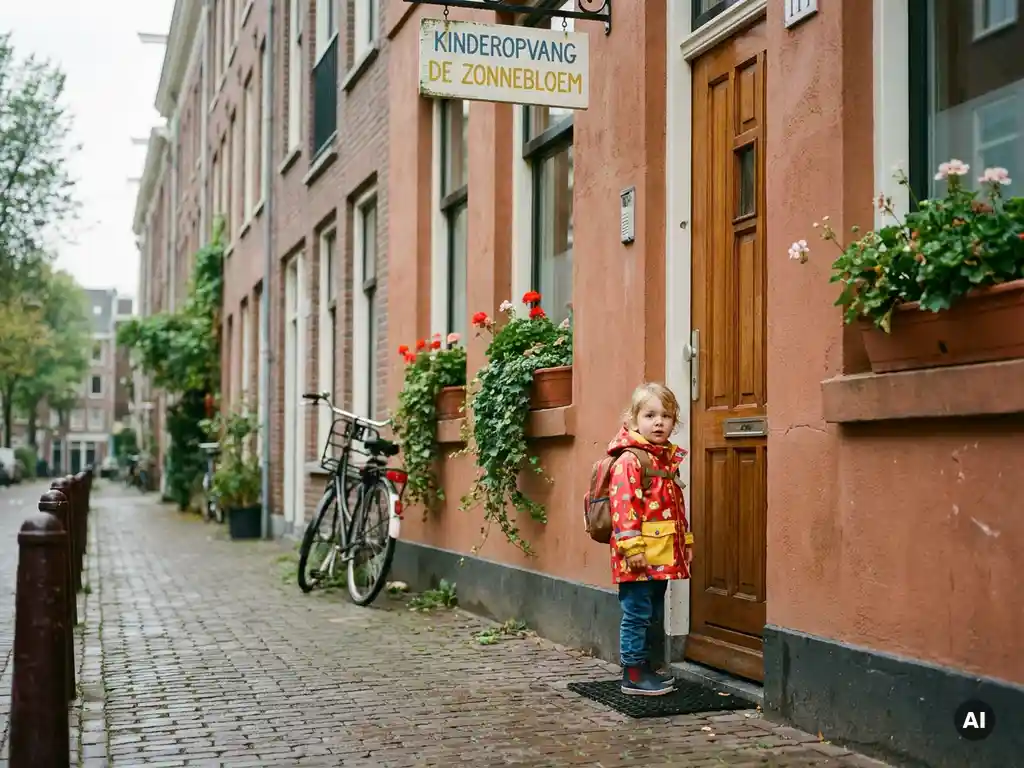
Childcare waiting lists in Amsterdam average a few months to more than two years, depending on the location and type of care. Popular neighborhoods such as Amsterdam-Zuid or Oud-West have the longest waiting times, while options in less sought-after areas become available more quickly. In this article, we answer the most frequently asked questions about childcare in Amsterdam, so you as a (prospective) expat are well prepared.
How long do you typically wait for a childcare spot in Amsterdam?
In Amsterdam, the average wait for a childcare spot is six to eighteen months. At popular locations in desirable neighborhoods, waiting times can extend to two years or more. The exact waiting time depends heavily on your child’s age, the days you need, and the type of care you are looking for.
For babies (zero to one year), the waiting time is longest, as there are relatively few baby spots available compared to demand. Toddlers have a slightly better chance of a quicker placement, especially if you are flexible about the choice of days or location. Full-day care is generally harder to obtain than after-school care (BSO).
If you are moving to Amsterdam, it is wise to recognize that finding childcare is an integral part of planning your move. The earlier you start, the greater your chances of securing a good spot.
Need a local Homie?
Share your plans with us and discover how we can help with your home, move or relocation in the Netherlands.
When should you register your child for childcare?
Register your child for childcare as soon as you know you are moving to Amsterdam, preferably six to twelve months before the desired start date. For babies, the rule is: the earlier the better — ideally during pregnancy. Waiting until after you arrive in the Netherlands significantly increases the chance of ending up at the back of a long waiting list.
Many parents moving to the Netherlands underestimate how early they need to start. Registering while you are still living abroad is entirely possible at most childcare organizations in Amsterdam. In most cases, all you need is an email address and your child’s date of birth (or expected due date).
What factors affect the childcare waiting time?
The waiting time for childcare in Amsterdam is determined by a combination of factors: your child’s age, the desired neighborhood, the number of days, and the type of care. Flexibility on all of these points will significantly shorten your waiting time.
- Child’s age: Babies wait the longest. Toddlers have a better chance of quick placement.
- Neighborhood: Popular areas such as De Pijp, Oud-West, and Amsterdam-Zuid have the longest lists. Less in-demand neighborhoods offer spots more quickly.
- Number of days: Those who want three or five days will wait longer than someone looking for two days of care.
- Type of care: Full-day care (for children up to four years old) has a longer waiting time than after-school care or toddler care.
- Organization: Large providers such as Partou, Smallsteps, and KION manage their own waiting lists and can vary considerably by location.
If you are flexible about the location or willing to look a neighborhood further than your first preference, that increases your chances of a quicker placement.
How do you register your child at multiple childcare locations?
You register your child at multiple locations by contacting each childcare organization directly and individually. There is no central registration system in Amsterdam. You can place your child on multiple waiting lists simultaneously, which is advisable given the high demand.
Here is how to approach this practically:
- Make a list of childcare locations in your desired neighborhood or neighborhoods.
- Visit each provider’s website and find the registration form or contact page.
- Fill in the form with the desired start date, the number of days, and your child’s age.
- Confirm the registration by email and keep all confirmations.
- Contact each location every two to three months to check your position on the waiting list.
Once you accept an offer, cancel your other registrations. This helps other parents who are also waiting for a spot.
What are the alternatives if the waiting list is too long?
If the waiting list is too long, there are several alternatives available that can offer you a quick solution: host parent care, private childcare, au pairs, and informal care through family or friends are the most common options.
- Host parent care (gastouderopvang): A host parent looks after your child in a home environment. Waiting times are shorter than for regular full-day care, and you are entitled to childcare allowance if the host parent is registered through an accredited host parent agency.
- Private childcare: Some private providers operate without long waiting lists, but are more expensive. Check whether they are registered in the National Childcare Register (LRK) to receive the allowance.
- Au pair: An au pair lives with you and looks after your children. This requires a separate permit and has specific rules regarding working hours and compensation.
- Toddler care or preschool: For children aged two to four, the Municipality of Amsterdam offers subsidized toddler care, sometimes with shorter waiting times.
Combinations are also possible, such as two days of regular care and three days with a host parent, to bridge the period until a permanent spot becomes available.
Are expats entitled to childcare allowance in the Netherlands?
Expats are entitled to childcare allowance if they work in the Netherlands, pay taxes, and their child attends a registered childcare facility. The allowance is applied for through the Tax Authority (Belastingdienst) and is linked to your income and the number of hours you work.
To qualify, the following conditions apply:
- You have a BSN number (citizen service number).
- You work in the Netherlands and pay Dutch income tax.
- Your child attends a childcare facility registered in the National Childcare Register (LRK).
- You have a DigiD to apply for the allowance digitally.
The amount of the allowance depends on your household income and the number of hours of care per month. The lower the income, the higher the percentage the government reimburses. For 2026, the government covers a large portion of the costs, making childcare affordable for most working parents.
EU citizens working in the Netherlands generally fall under this scheme directly. Non-EU expats need a valid residence permit and must demonstrably work in the Netherlands to qualify.
How we help with arranging childcare and your move to the Netherlands
Moving to Amsterdam with children requires more preparation than just finding a home. From applying for your BSN to arranging childcare allowance and local registration: there are many practical steps you need to take simultaneously. At Urban Homies, we guide expats through this entire process, so you can focus on your new job and your family.
Our expat relocation services include, among other things:
- Assistance with municipal registration and BSN application
- Support with IND procedures and residence permits for non-EU expats
- Practical help with arranging utilities and local services
- Personal advice through your own homie, a trusted local expert
Are you planning to move to the Netherlands and want to know how we can make your landing as smooth as possible? Contact us for a personal consultation.
Need a local Homie?
Share your plans with us and discover how we can help with your home, move or relocation in the Netherlands.