
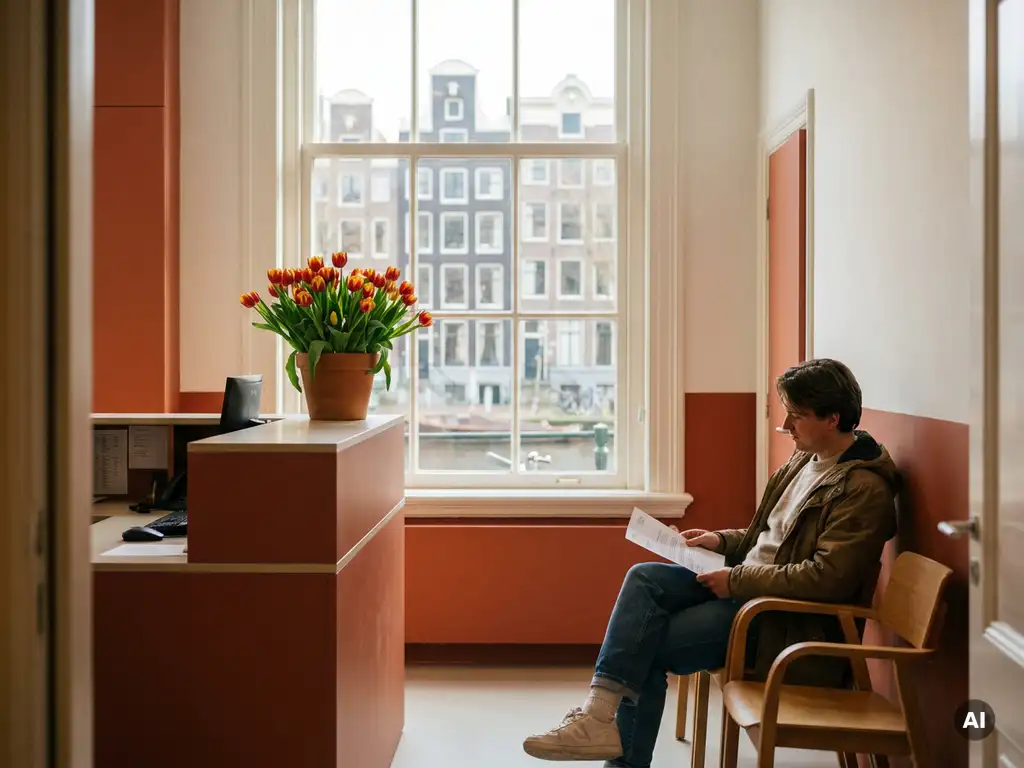
In the Netherlands, you do need a referral from your general practitioner (GP) for most medical specialists. The Dutch healthcare system operates on a gatekeeper principle: your GP first assesses your complaints and decides whether a referral to a specialist is necessary. Without that referral, your health insurance will not cover specialist care in most cases. There are exceptions, and as an expat newly arriving in the Netherlands, it is good to understand exactly how this system works.
When do you need a referral?
You need a referral for virtually all medical specialists working within secondary care, such as internists, cardiologists, orthopedic surgeons, dermatologists, and psychiatrists. Your GP assesses your complaints and issues a written referral if he or she determines that specialized care is necessary. Without this referral, you will in most cases pay the full costs yourself.
The gatekeeper system exists to prevent unnecessary and expensive specialist care. The GP acts as the first point of contact and filters which complaints can be treated directly and which require further diagnostics or treatment. This keeps healthcare affordable and accessible for everyone in the Netherlands.
Examples of situations where you always need a referral:
- Visiting a medical specialist in a hospital
- Psychological or psychiatric treatment through mental health services (GGZ)
- Rehabilitation care or specialized physiotherapy
- Treatment by a pulmonologist, neurologist, or rheumatologist
Which specialists are directly accessible without a referral?
A number of healthcare providers in the Netherlands are directly accessible, meaning without a referral from your GP. These include the dentist, midwife, physiotherapist (for the first treatment), speech therapist, and dietitian. The emergency department (ED) is also always accessible in acute emergencies, regardless of whether you have a referral.
Opticians and audiologists can also be visited without a referral for an eye test or hearing test. Do keep in mind that reimbursement from your basic insurance is limited for some of these healthcare providers. Supplementary insurance policies often cover more, such as dental care or multiple physiotherapy sessions.
How do you request a referral from your GP?
You request a referral by making an appointment with your GP and discussing your complaints. The GP assesses whether a referral is medically necessary and then sends a referral letter to the relevant specialist or institution. This is now often done digitally, directly to the hospital or outpatient clinic.
Practical steps to arrange a referral:
- Make an appointment with your GP, by phone or via the practice’s online calendar
- Describe your complaints as concretely and completely as possible
- The GP decides whether a referral is appropriate and to which specialist
- You receive a referral letter, or the referral is sent digitally
- You make the appointment with the specialist yourself, unless the practice arranges this for you
Do you speak little or no Dutch? Ask the GP practice whether an English-speaking doctor is available, or bring someone who can interpret. In larger cities such as Amsterdam, many GPs are accustomed to communicating in English.
What if you do not yet have a GP in the Netherlands?
If you are not yet registered with a GP in the Netherlands, you will face a problem when requesting a referral. No GP means no referral, and without a referral there is no reimbursed specialist care. Registering with a GP is therefore one of the first steps you take after arriving in the Netherlands.
Find a GP practice in your area via your health insurer’s website or through the municipal information service. Not every practice has space for new patients, so start searching in good time. To register, you generally need your BSN number, proof of identity, and health insurance card.
In emergencies, you can go to an out-of-hours GP service (HAP). This is intended for acute complaints outside of office hours. The HAP can in some cases also issue a temporary referral if that is medically necessary.
Does health insurance cover a visit without a referral?
In most cases, Dutch basic insurance does not cover a visit to a specialist if you go without a referral. You then pay the full costs yourself, on top of your deductible. There are exceptions for directly accessible healthcare providers such as the dentist or physiotherapist, but for secondary specialist care the referral rule applies strictly.
Some supplementary insurance policies offer more flexibility, but even these often state the referral requirement. Read your policy terms carefully before making an appointment without a referral. If in doubt, call your health insurer’s customer service to confirm what is and is not covered.
How does the referral system work differently for expats?
For expats newly arriving in the Netherlands, the referral system works in principle the same as for Dutch residents, but in practice it is more complex. You need a valid health insurance policy, a BSN number, and a registered GP before you can claim reimbursed care. Without these three building blocks, you will quickly run into payment problems.
EU citizens can temporarily use their European Health Insurance Card (EHIC), but this only covers emergency care and not regular specialist treatment. Non-EU expats are required to take out Dutch health insurance as soon as they have a residence permit. This also applies to partners and children who accompany them.
Practical points of attention for expats:
- Take out health insurance as soon as possible after arrival
- Apply for your BSN at the municipality or via an expat desk
- Register with a GP as soon as you have a fixed address
- Keep all referral letters and medical documents carefully
- Ask your GP for an English-language referral letter if needed
How we help with arranging care after your move to the Netherlands
At Urban Homies we understand that moving to the Netherlands involves more than finding a home. Practical matters such as applying for a BSN, registering with the municipality, and understanding the Dutch healthcare system are all part of it. Through our expat relocation services we guide you step by step through this process, so that you quickly have the basic provisions in place that you need to settle in well.
Whether you are moving to Amsterdam as an individual or as an employee through your employer, we ensure that the administrative foundation is correct. Think of support with BSN applications, municipal registration, and navigating immigration procedures. This way you can focus on settling in, while we handle the complex matters. Contact us for a personal conversation about what we can do for you.