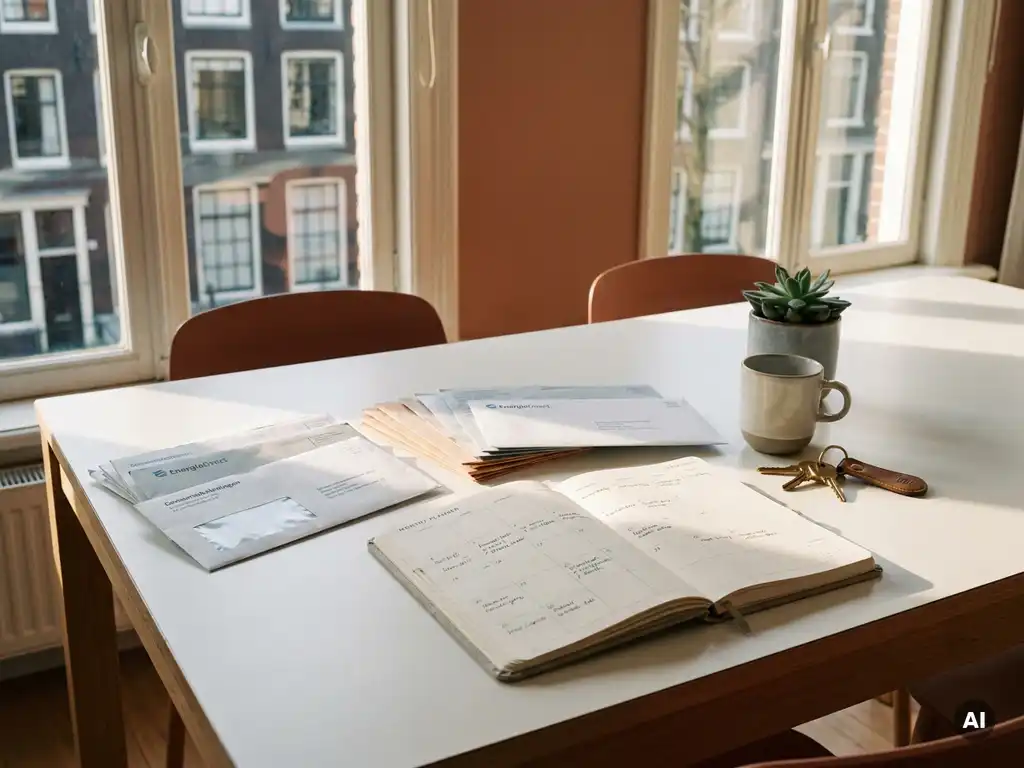
If you live in the Netherlands, you pay on average between €1,200 and €1,800 per month in fixed costs, depending on your living situation, family size, and whether you rent or buy. The biggest expenses are rent or mortgage, health insurance, energy, and municipal taxes. In this article, we answer the most frequently asked questions about fixed living costs in the Netherlands, so you know exactly what to expect.
How much do you pay on average per month in fixed costs in the Netherlands?
The average fixed costs in the Netherlands for a renter range between €1,200 and €1,800 per month, excluding groceries and other variable expenses. For buyers, total monthly costs are often higher due to mortgage expenses, but can work out more favorably than renting in the long run. The exact amount depends heavily on your living situation, family composition, and location.
To give a realistic picture, here is an overview of the most important fixed cost items for an average expat or international professional living in or around Amsterdam:
- Rent or mortgage: €900 to €2,500+ per month (depending on city and property type)
- Health insurance: €130 to €180 per month per adult
- Energy (gas, electricity, water): €150 to €300 per month
- Municipal taxes: €20 to €60 per month (on average)
- Internet and phone: €40 to €80 per month
If you are just moving to the Netherlands, it is smart to map out these costs before you arrive. This way you avoid financial surprises in the first few weeks.
Need a local Homie?
Share your plans with us and discover how we can help with your home, move or relocation in the Netherlands.
What is health insurance and are you required to take it out?
Yes, health insurance in the Netherlands is mandatory for everyone who lives or works here, including expats. You are legally required to take out basic insurance as soon as you register with the municipality. In 2026, the monthly premiums for basic insurance average between €130 and €180 per month per adult.
The basic insurance covers GP visits, hospital care, and a large portion of medication costs. In addition to the monthly premium, you also pay an excess (eigen risico), which in 2026 is set at €385 per year. This means you pay the first €385 in healthcare costs yourself each year; after that, the insurance kicks in.
Would you like more coverage, for example for dental care, physiotherapy, or glasses? Then you take out supplementary insurance. This is not mandatory, but useful for many expats, especially if you have children or regularly use supplementary care. Children under 18 are insured free of charge under a parent’s basic insurance.
Which municipal taxes do you have to pay as a resident?
As a resident of a Dutch municipality, you pay a number of local taxes annually. The most important are the property tax (OZB) for homeowners, and the waste disposal levy and sewage levy for all residents, including renters. The total amount varies by municipality but averages between €300 and €700 per year.
Here are the most common municipal levies:
- Waste disposal levy: for the collection and processing of household waste
- Sewage levy: for the use and maintenance of the sewage system
- OZB (owners): based on the WOZ value of your property
- Water board tax: for water management and dike maintenance, paid to the water board
You typically receive these assessments at the beginning of the year by post or digitally. In Amsterdam, municipal costs are slightly higher than the national average, which is relevant if you are considering finding expat housing in Amsterdam.
What does energy (gas, electricity, and water) cost in the Netherlands?
The average energy costs in the Netherlands for a two-person household in 2026 are around €150 to €250 per month for gas and electricity combined. Water costs on average €25 to €40 per month. The exact costs depend on your energy contract, the type of property, and how energy-efficiently you live.
The Netherlands has a liberalized energy market, which means you choose your own energy supplier and compare contracts. If you take out a fixed-price contract, you know exactly what you pay each month. With a variable contract, costs fluctuate with market prices.
Water in the Netherlands is supplied by regional drinking water companies. You pay a fixed subscription fee plus an amount per cubic meter of consumption. On average, Dutch residents use around 120 liters of water per person per day, which keeps the water bill relatively manageable.
Tip: When renting a property, check whether gas, electricity, and water are already included in the rent or whether you need to arrange these yourself. In many cases, renters take out their own contracts.
What fixed costs come with buying versus renting?
Whether you buy or rent in the Netherlands makes a big difference to your monthly fixed costs. Renters pay a fixed monthly rent and are rarely responsible for major maintenance. Buyers pay a mortgage, but also additional costs such as building insurance, homeowners’ association (VvE) contributions, and maintenance reserves.
Fixed costs when renting
As a renter, your fixed costs are relatively predictable. You pay monthly rent, arrange your own energy and internet, and pay municipal levies such as the waste disposal levy. Major maintenance on the property is the landlord’s responsibility. Some rental properties have a service charge component for shared facilities such as a lift or communal spaces.
Fixed costs when buying
As a homeowner, additional monthly costs come into play:
- Mortgage interest and repayment: the largest monthly expense
- Building insurance: mandatory with a mortgage, covers damage to the property itself
- VvE contribution: for apartments, you pay monthly to the homeowners’ association for shared maintenance
- OZB: annual municipal tax on the value of your property
- Maintenance reserve: wise to set aside monthly for future maintenance
Buying often offers a financial advantage in the long term, but requires a larger financial buffer and greater personal responsibility for the property.
How can you save on your fixed costs in the Netherlands?
You can save on your fixed costs in the Netherlands by actively comparing options, making use of allowances, and making conscious choices when signing contracts. The biggest savings can be made on energy, health insurance, and telecom subscriptions, since you choose your own supplier for all of these.
Practical ways to save:
- Apply for healthcare allowance (zorgtoeslag): If your income is below a certain threshold, you are entitled to a healthcare allowance from the Tax Authority. This can save you hundreds of euros per year.
- Apply for housing allowance (huurtoeslag): If you rent a property below the liberalization threshold and your income falls within the set limits, you can receive housing allowance.
- Compare energy contracts: Use comparison websites to check annually whether your energy contract is still competitive.
- Compare health insurance annually: Every year in November and December you can switch to a different health insurer without penalty.
- Live energy-efficiently: Insulation, a lower heating temperature, and energy-efficient appliances noticeably reduce your energy bill.
New to the Netherlands and not yet familiar with the allowances system? Make sure you register with the municipality as quickly as possible and apply for a BSN number, because without a BSN you cannot apply for allowances or take out contracts.
How we help you arrange your fixed costs in the Netherlands
Moving to the Netherlands involves many practical matters, and fixed costs are a major part of that. We guide you through every step of this process, from your municipal registration and BSN application to connecting your utilities. Without those basic registrations, you cannot take out an energy contract, apply for healthcare allowance, or open a bank account. We make sure all of this is arranged quickly and correctly, so you can focus on settling in.
Urban Homies offers a complete package of expat housing services where we not only find you a home, but also handle the practical matters surrounding your new home. Whether you are moving to the Netherlands as an individual or through your employer, we are ready to be your personal guide. Get in touch and we will tell you exactly how we can make your move to the Netherlands as smooth as possible.
Need a local Homie?
Share your plans with us and discover how we can help with your home, move or relocation in the Netherlands.