
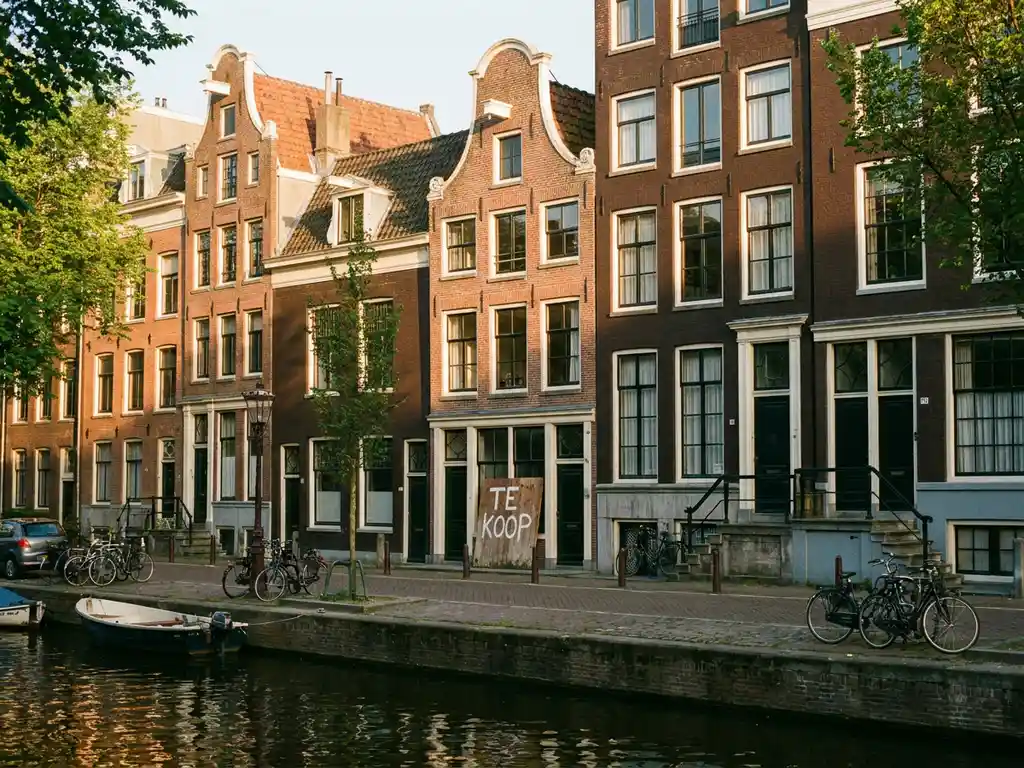
The neighborhood has a major influence on the selling price of your home. Location is often a decisive factor in the real estate market: two comparable homes can differ significantly in price based purely on the area in which they are located. Factors such as safety, accessibility, school quality, and ongoing neighborhood renewal together determine how attractive a property is to buyers. In this article, we answer the most frequently asked questions about how the neighborhood affects the selling price.
Which neighborhood factors have the greatest impact on property value?
The neighborhood factors with the greatest impact on property value are safety, accessibility, the quality of nearby schools, the presence of green spaces and amenities, and the overall appeal of the area. Buyers weigh these factors — consciously or unconsciously — during every viewing and with every offer they make.
Accessibility plays a particularly significant role. A home located close to a train station, highway, or good public transit connections attracts more interested buyers. The less time someone spends commuting, the more attractive the location becomes. This translates directly into higher asking prices and less time on the market.
Green spaces and livability also carry considerable weight. Parks, waterfronts, and quiet streets enhance the living experience. Neighborhoods with attractive public spaces draw buyers who are willing to pay more for that quality of life. Nearby shops, restaurants, and cultural amenities reinforce that effect even further.
How does neighborhood safety affect the selling price?
The safety of a neighborhood has a direct impact on the selling price of a home. In areas with low crime rates and a sense of social cohesion, buyers are willing to pay more. Conversely, high crime rates or an unsafe reputation noticeably push asking prices down, even if the property itself is in excellent condition.
Buyers look not only at current safety statistics, but also at the perception of a neighborhood. An area that has been in the news in recent years due to nuisance or crime carries that reputation with it, even if the situation has since improved. This makes safety a factor that is difficult to separate from a neighborhood’s overall image.
For sellers, it is useful to know how their neighborhood scores on safety indexes and how those scores compare to surrounding areas. Local authorities regularly publish safety reports that provide insight into trends. A positive development in safety is something you can actively highlight as a selling point during the sale.
What effect does proximity to schools have on the asking price?
Proximity to good schools increases the asking price of a home, especially in neighborhoods where families with children are the primary target group. Buyers with children place great value on a short walking distance to an elementary or secondary school with a strong reputation, and are willing to pay extra for it.
It is not just about distance, but also about school quality. Schools with positive inspection ratings or a strong local reputation attract families who deliberately choose a particular neighborhood because of its educational offerings. This structurally increases demand for homes in that area.
For properties that do not fall within a typical family segment — such as studios or small apartments — proximity to schools carries less weight. But for single-family homes and larger apartments, it is a relevant selling point that you can include in the presentation of your property.
How does ongoing neighborhood renewal affect the selling price?
Ongoing neighborhood renewal has a dual effect on the selling price. In the short term, construction disruption, uncertainty, or a messy streetscape can push asking prices down. In the longer term, a successful renewal increases the attractiveness of the area and property prices typically rise as a result.
Timing is therefore important when selling during neighborhood renewal. If you sell in the middle of a large-scale renovation project, you need to account for buyers who are uncertain about the end result. If you sell after the renewal is completed or well advanced, you benefit from the area’s improved standing.
- Early in the project: Lower asking price, but potential for value growth for the buyer
- Mid-project: Uncertainty may deter buyers; clear communication about the plans helps
- After completion: Higher asking price justified by an improved living environment and overall appeal
Municipal neighborhood renewal plans are publicly available through zoning plans or the local government website. As a seller, it is wise to proactively share this information with potential buyers so they get a complete picture of the neighborhood’s future.
Can a good neighborhood increase the value of an outdated home?
Yes, a good neighborhood can significantly increase the value of an outdated home. A property that is worn or dated on its own, but located in a desirable area, attracts buyers who are willing to renovate. The location partially offsets the condition of the home, because buyers know that a good neighborhood is hard to replicate.
This principle works in both directions. A beautifully renovated home in a less desirable area often sells more slowly than an outdated home in a popular neighborhood. Buyers reason that you can renovate a home, but you cannot change the neighborhood. That logic drives asking prices up in popular areas, even for properties that still require a great deal of work.
As the seller of an outdated home in a good neighborhood, it is worth making this point explicitly. Emphasize the location advantages, the proximity to amenities, and the popularity of the area. Buyers looking for a home to make their own see an outdated property in a great neighborhood as an opportunity rather than a drawback.
How do you compare neighborhoods to achieve the best selling price?
You compare neighborhoods for the best selling price by looking at recent transaction prices for comparable homes in different areas, combined with objective data on safety, accessibility, amenities, and school quality. This combination gives you a realistic picture of what the neighborhood contributes to the value of your home.
Practical steps to compare neighborhoods:
- Review recent selling prices through property registries or real estate platforms for comparable homes in your area and neighboring districts
- Analyze safety data through your local government’s safety reports
- Check accessibility by comparing travel times to major employers and public transit connections
- Look up school ratings through official education inspection websites
- Review municipal plans for future developments in the area
An honest comparison not only helps you set a realistic asking price, but also positions your home effectively. If your neighborhood scores better than surrounding areas on multiple fronts, that is a selling point you can actively use in the presentation of your property.
How we help you sell your home
At Urban Homies, we combine local market expertise with a personal approach to sell your home for the best possible price. We carry out a detailed property valuation that looks not only at the home itself, but also at the neighborhood factors that influence the price. This gives you a clear picture of where you stand and how we can position your home most effectively in the market.
What we do for you as your selling agent:
- Tailored property valuation, including analysis of neighborhood developments and comparable transactions
- Professional presentation with photography and a custom listing that highlights the location advantages
- Targeted marketing strategy tailored to the right audience for your neighborhood
- End-to-end guidance, from the initial strategy consultation to signing at the notary
Want to know what your home is worth and how the neighborhood factors in? Contact us for a no-obligation conversation. We are happy to help.