
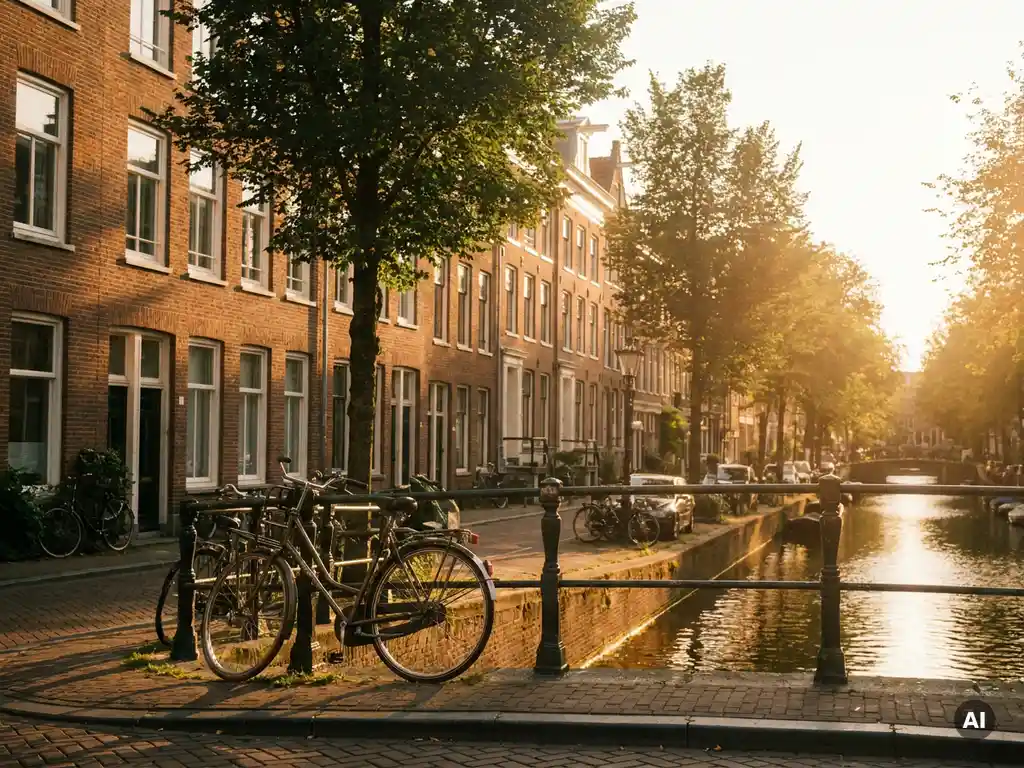
The most popular places around Amsterdam for expats are Amstelveen, Haarlem, and Almere. These cities combine good accessibility to Amsterdam with more space, greenery, and often lower rental prices. Internationals are increasingly choosing to live outside the city, especially now that supply within Amsterdam itself is limited and competition on the housing market remains fierce. In this article, we answer the most frequently asked questions about living in the Amsterdam region as an expat.
Why do expats choose a place outside Amsterdam?
Expats choose a place outside Amsterdam because rental prices in the city are high, supply is limited, and competition is intense. Places like Amstelveen, Haarlem, and Almere offer more living space for less money, while public transport or the car gets you to Amsterdam quickly for work or leisure.
The housing market in Amsterdam has come under considerable pressure in recent years. For expats who have just arrived in the Netherlands and have not yet built up a network, it is difficult to quickly find a suitable home in the city itself. Outside Amsterdam, you more often find available properties, more spacious apartments, and more family-friendly neighborhoods with schools, parks, and amenities.
In addition, quality of life plays a major role. Many international professionals, especially those with a family, prefer a quieter environment. Places around Amsterdam offer that peace and quiet, without fully giving up the benefits of a major city. Rail connections and motorways make commuting to Amsterdam comfortable and predictable.
Need a local Homie?
Share your plans with us and discover how we can help with your home, move or relocation in the Netherlands.
Which places around Amsterdam are most popular with expats?
The most popular places around Amsterdam for expats are Amstelveen, Haarlem, and Almere. Amstelveen is known as the international hub with a large expat community. Haarlem attracts expats with its historic character and vibrant city center. Almere is popular for its modern housing and relatively low rental prices.
In addition to these three, Amsterdam-Noord, Amsterdam-West, and IJburg are also popular with internationals who want to live a little closer to the city. IJburg is a relatively new district on an island, with modern architecture and a young, international resident population. Amsterdam-Noord has developed over recent years into a creative and diverse neighborhood with a growing number of expats.
For those who want to look further afield, Diemen also offers an interesting option: right next to Amsterdam, easily accessible by metro, and with a growing supply of rental properties. The choice depends heavily on personal priorities, such as the availability of international schools, distance to work, and the available budget.
What makes Amstelveen so popular among international professionals?
Amstelveen is popular among international professionals because of its large international community, the presence of international schools, and its direct accessibility to Amsterdam. The city has a long history as a home base for expats, partly due to its proximity to Schiphol and the headquarters of many multinationals in the region.
One of Amstelveen’s greatest assets is its international school offering. The British School of Amsterdam and the International School of Amsterdam (ISA) are both located in or just outside Amstelveen. For expat families with school-age children, this is a decisive factor when choosing a place to live.
Amstelveen also has a strong level of amenities: the Stadshart shopping center, plenty of green space such as the Amsterdamse Bos, and a quiet, family-friendly atmosphere. Rental prices are slightly lower than in Amsterdam itself, but the comfort and quality of the homes are comparable or even higher. Many expats who move to the Netherlands for the first time therefore deliberately settle in Amstelveen.
How does living in Haarlem differ from living in Amsterdam for expats?
Living in Haarlem differs from living in Amsterdam in that Haarlem has a smaller-scale, quieter character with a strong historic city center. Rental prices are on average lower than in Amsterdam, life feels somewhat more relaxed, and yet you can reach the center of Amsterdam by train in about 15 minutes.
Haarlem attracts expats who want to experience the atmosphere of a genuine Dutch city, with canals, historic buildings, and a vibrant hospitality scene, but without the hustle and high costs of Amsterdam. The city has an active international community and more and more expats are discovering Haarlem as a serious alternative to the capital.
An important difference is the housing supply. In Haarlem you more often find more spacious homes, sometimes with a garden, at a price that is barely achievable in Amsterdam. For expats moving to the Netherlands with a family or with a need for more living space, Haarlem is therefore an attractive choice. The city is also easily accessible by bicycle and has excellent rail connections to Amsterdam and Schiphol.
Which factors determine the best place to live for an expat?
The best place to live for an expat depends on five factors: distance to work, the available budget, the presence of international schools, the size of the local expat community, and the quality of public transport. Anyone who has a clear picture of these factors can quickly choose the right region.
Below is an overview of the most important considerations:
- Budget: Amsterdam has the highest rental prices. Amstelveen, Haarlem, and Almere offer more value for money.
- International schools: Amstelveen has the strongest offering. Always check waiting lists before choosing a place to live.
- Travel time: Haarlem and Amstelveen are 15 to 20 minutes from Amsterdam Centraal. Almere requires a slightly longer commute.
- Expat community: Amstelveen has the largest international community, which makes settling in easier.
- Living comfort: Outside Amsterdam you more often find homes with more space, a garden, or a parking space.
It is also useful to look at practical matters such as proximity to supermarkets, general practitioners, and municipal services. For expats who are still in the process of registering with the municipality and applying for a BSN number, a conveniently located town hall is a practical advantage.
How do you find a home in the Amsterdam region as an expat?
As an expat, the fastest way to find a home in the Amsterdam region is to work with a local real estate agent or relocation specialist who knows the market. The Dutch rental market moves quickly: popular properties can be gone within a day. Without local knowledge and a strong network, you miss out on opportunities.
A number of steps you can take when searching for a home:
- Determine your priorities in terms of location, budget, and housing preferences before you start searching.
- Engage a local expert who has access to properties that are not always listed online.
- Prepare your documents: an employer’s statement, pay slips, and a copy of your passport are standard requirements for a rental application.
- Schedule viewings quickly: in the Amsterdam region, properties go fast. Respond immediately and be flexible with timing.
- Have the rental contract reviewed by someone with knowledge of Dutch tenancy law before you sign.
In addition to finding a home, there are also practical matters to arrange, such as connecting utilities, registering with the municipality, and, for non-EU expats, the IND procedure. These are steps that take a lot of time if you figure them out yourself, but which go considerably more smoothly with the right guidance.
How we help with finding a home around Amsterdam
Urban Homies guides expats in finding a suitable home in the Amsterdam region, from Amstelveen to Haarlem and from IJburg to Almere. We connect you with a personal homie, a local expert who knows your situation and who negotiates on your behalf, schedules viewings, and reviews the rental contract. That way you don’t have to navigate the market yourself while you’re still abroad. View our offering on our page about expat housing for a complete overview of what we can do for you.
In addition to housing, we also handle the practical matters that come with moving to the Netherlands: municipal registration, BSN application, utilities, and for non-EU expats also the IND procedure and any Blue Card application. We work with short communication lines and realistic expectations, so you know exactly where you stand. Want to know what we can do for you? Get in touch and we’ll discuss the best approach for your situation together.
Need a local Homie?
Share your plans with us and discover how we can help with your home, move or relocation in the Netherlands.