
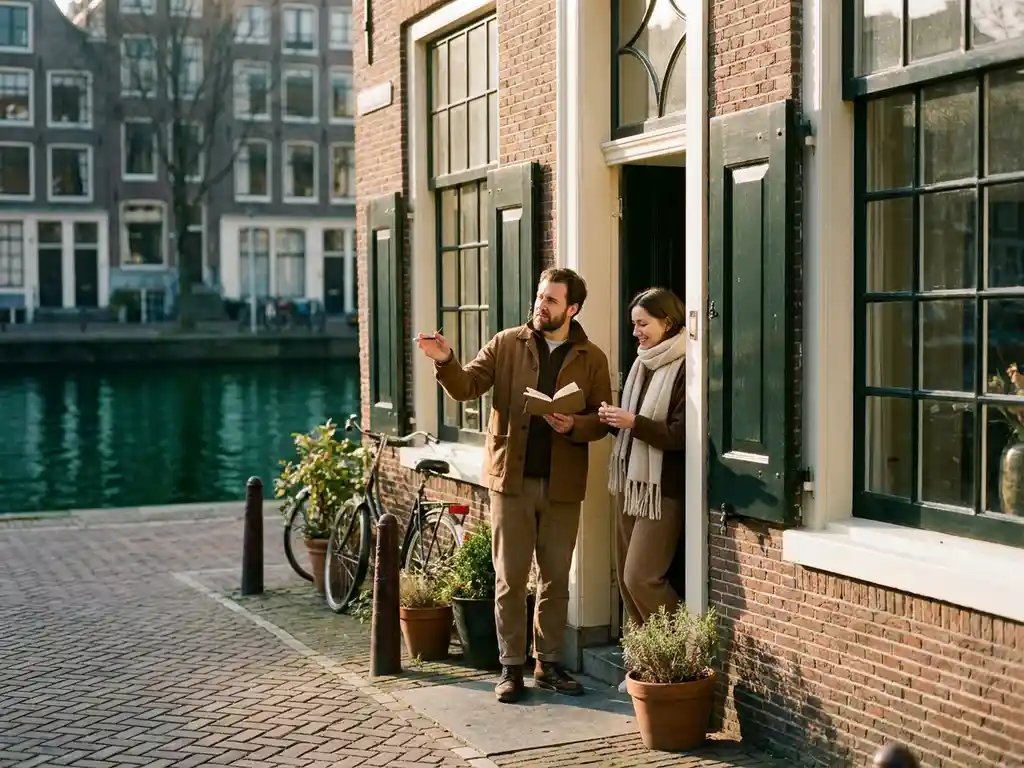
On average, Dutch buyers do two to four viewings before making an offer. How quickly you reach a bid depends largely on market pressure in your region, your own housing preferences, and how well prepared you are. In this article, we answer the most frequently asked questions about viewings, so you know exactly what to expect.
How many viewings do Dutch buyers do on average?
Dutch buyers do an average of two to four viewings before placing an offer. In cities with a tight housing market, such as Amsterdam and Haarlem, that number is sometimes lower, because properties sell quickly and buyers have less time to hesitate. In quieter regions, there is more room to compare multiple homes.
This average also says something about the overall search process. Many buyers view dozens of properties before finding one that truly fits. But the number of viewings per property remains limited: most people decide after one or two visits whether a home is a serious contender. A second viewing then serves primarily to check details and resolve any remaining doubts.
In the current 2026 market, we are seeing buyers increasingly make a decision at the first viewing. The combination of limited supply and high demand forces buyers to act quickly. Those who wait too long risk the property being sold before they can schedule a second appointment.
What factors determine how many viewings you need?
The number of viewings you need is determined by a combination of personal factors and market conditions. Pressure on the housing market, your own clarity about what you are looking for, and your experience as a buyer all play a role. The more specific your requirements and the better you know the market, the faster you will reach an offer.
The key factors at a glance:
- Market pressure: In a tight market, there is less time to hesitate. Popular neighborhoods in Amsterdam or Haarlem require quick decisions.
- Clarity about housing preferences: Buyers who know what they want — property type, neighborhood, budget — decide faster and more purposefully.
- Experience as a buyer: Those who have bought a home before can more quickly tell whether a property feels right or not.
- Condition of the property: With older homes or properties requiring renovation, buyers often want a second viewing to better assess the structural condition.
- Emotional factor: Some people need more visits to feel confident. That is completely understandable, but in a competitive market it can reduce your chances.
Buyers who operate without a buyer’s agent tend to do more viewings on average. A buyer’s agent filters listings in advance and helps you look more purposefully, which often reduces the total number of viewings.
When is it wise to make an offer after just one viewing?
Making an offer after one viewing is a smart move when the property clearly meets all your criteria, the asking price is in line with the market, and you know there are other interested parties. In a competitive market, waiting for a second viewing is sometimes simply not an option. Acting quickly increases your chances of success.
There are specific situations in which one viewing is enough:
- You have already thoroughly explored the neighborhood and know the location is right for you.
- The property has been recently renovated or is move-in ready, leaving fewer uncertainties.
- The agent indicates that multiple offers are expected.
- You have already viewed many similar properties and know exactly what you are looking for.
- You are working with a buyer’s agent who has assessed the property on your behalf.
If you do decide to make an offer after one viewing, make sure your contingencies are properly arranged. A financing contingency and a structural survey contingency provide a safety net if something turns out to be wrong afterward. This way, you can act quickly without taking unnecessary risks.
How do you prepare for a viewing so you can make an offer sooner?
Good preparation enables you to make a well-considered decision during the viewing itself. Determine your maximum budget, your absolute requirements, and your wishes in advance, and research the neighborhood and comparable sale prices. The more you know before you walk through the door, the faster you can act.
Practical steps to prepare:
- Draw up a wish list: Divide your preferences into “must-haves” and “nice-to-haves.” This helps you quickly assess on the spot whether a property is a serious option.
- Research the asking price: Compare the asking price with recently sold properties in the area. This tells you whether the price is realistic and what a reasonable offer might be.
- Visit the neighborhood in advance: Drive or walk through the street on a weekday and on the weekend. Pay attention to parking, noise levels, and the general feel of the area.
- Prepare targeted questions: Ask about the energy performance rating, the homeowners’ association fees for an apartment, the condition of the roof, and any known defects.
- Arrange your financing in advance: Know the maximum amount you can borrow. A mortgage advisor can quickly give you an indication, so you know within what budget you can bid.
Those who walk into a viewing well prepared need to ask fewer questions afterward and can decide more quickly. That is a concrete advantage in a market where speed matters.
What is the difference in number of viewings between expats and Dutch buyers?
Expats do an average of more viewings than Dutch buyers, simply because they are less familiar with the local market, neighborhoods, and regulations. Where a Dutch buyer has known the city for years, an expat often starts from scratch. That requires more orientation, more visits, and more guidance to arrive at a well-founded offer.
On top of that, there are a number of practical challenges:
- Unfamiliarity with neighborhoods: Expats often do not know the difference between Amsterdam Zuid and Amsterdam Oost, or what a property in Amstelveen means relative to the city center.
- Language barrier: Rental agreements, purchase contracts, and correspondence with agents are all in Dutch, which makes the process slower and more complex.
- Limited availability: Expats still living abroad cannot simply schedule a viewing at short notice. Every trip to the Netherlands needs to be used efficiently.
- Unfamiliarity with the buying process: The Netherlands has specific rules around bidding, contingencies, and the role of the notary. This requires explanation and guidance.
For expats, a local buyer’s agent with experience in relocation is therefore not a luxury but a practical necessity. That guidance helps limit the number of viewings and focus the search on properties that are truly a good fit.
How we help you sell your home
Are you a homeowner looking to sell your property? At Urban Homies, we guide you through the entire sales process, from valuation to signing at the notary. We develop a targeted marketing strategy, arrange professional photography, and create a listing that stands out to the right buyers. Thanks to our knowledge of the Amsterdam market and surrounding areas such as Amstelveen, Haarlem, and Almere, we know exactly how to position your home to its best advantage.
What we take care of for you:
- Detailed valuation based on current market data
- Professional presentation with photography and a tailor-made listing
- Guidance through negotiations and legal handling
- Aftercare following the transfer at the notary
Want to know what your home is worth or how we approach the sales process? View our sales services or contact us directly for a no-obligation conversation.